
Handling Requirements from Architects Outside the Team
I was recently asked what I thought about using the "Wise Architects" in a company to provide technical oversight to the multiple teams on a project.
A common objection to this is that the architects are outside the team and should not, therefore, have any say in how the team builds whatever it is that they are building.
This argument doesn't hold water, though, as there are other outsiders who provide requirements to the team. But those requirements are always filtered through a product owner who decides whether they are important or not.

An organization's Wise Architects often provide requirements to a team in the form of non-functional requirements. I think of non-functional requirements as "constraints" on how a team solves a problem. So the Wise Architect cannot tell a team how they solve a problem, but can provide constraints on how it's solved---the system must scale to a certain number of concurrent users, it must process this many transactions per minute, it must run on Linux, it must integrate with our such-and-such, etc. Non-fucntional requirements become product backlog items and can be prioritized by the product owner based on how important the product owner views compliance with each. For example, if a product owner decides that running on Linux is not critical and the product could be just as successful on a different server OS, the product owner would remove that non-functional requirement or perhaps place it low on the product backlog so the team is at least aware the architect wants it.
Working with Non Functional Requirements & Product Backlogs
FeaturedWorking with non functional requirements in product backlogs is a unique challenge for agile teams. Non-functional requirements (NFRs) are not tasks you complete once and move on from. Instead, they represent ongoing work that needs to be considered with every new feature or update.

Effective Agile Teams
FeaturedEffective agile teams are designed to finish valuable work together. A useful way to remember the characteristics of effective agile teams is **SLAM**: self-managing, lean, autonomous, and multidisciplinary.
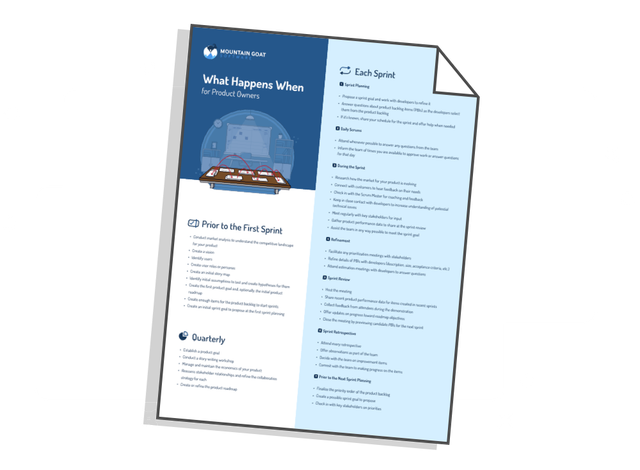
The Definitive Guide to the What and When of Product Owner Responsibilities
FeaturedDownload a guide that maps product owner responsibilities to the moments when they matter most. Sign up to get your free download


Should You Become a Product Owner?
Explore the skills, paths, and tradeoffs to consider before stepping into the product owner role.

Who Can Add Items to the Product Backlog?
Clarify who can add backlog items and how product owners keep control.

Writing the Product Backlog Just in Time and Just Enough
Keep backlog detail just enough and just in time.

Bugs on the Product Backlog
The ideal situation is to put the bugs right onto the product backlog.
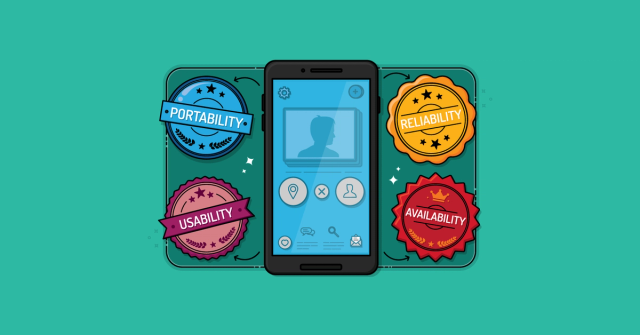
Non-functional Requirements as User Stories
Write non-functional requirements in ways teams can discuss, estimate, and test.
The Chief Product Owner on Large Agile Projects
Understand how product ownership can scale when one product owner is not enough.
How to Be Sure You've Thought of Everything
Use a simple reminder that no backlog captures everything up front.
What Does a Product Owner Do, When, and Why?
Clarify what product owners do before work starts, during planning, and throughout each sprint.
The Product Owner’s Second Team
Treat stakeholders as a second team so product decisions become clearer and more collaborative.

Why Your Product Backlog Should Look Like an Iceberg
Shape the backlog so near-term items are detailed and lower-priority work stays lighter.

Agile Requirements Gathering: Three Types of Requirements
Understand the three kinds of requirements teams need to consider.

Why Agile Teams Should Estimate at Two Different Levels
It’s important for most agile teams to estimate both their product and sprint backlogs. But why?