

Agile leadership helps teams succeed by creating clarity, removing obstacles, and giving teams room to make good decisions close to the work.
Great agile leaders set direction, create the right constraints, remove obstacles, and help teams learn quickly. They help teams succeed by creating the conditions in which the right decisions can emerge.
Who This Guide Is For
This guide is for leaders who want agile teams to take more ownership without leaving those teams unsupported.
It is especially useful for:
- Executives and senior leaders sponsoring agile adoption or agile improvement
- Engineering, product, and technology leaders working with agile teams
- Managers who want teams to take more ownership without being left unsupported
- Product leaders trying to improve planning, prioritization, and stakeholder alignment
- Scrum Masters and agile coaches helping leaders understand how leadership behavior affects teams
- Organizations where agile practices exist, but leadership habits still make agility harder than it needs to be
In This Guide
Explore why leaders should not compare team velocities, how to lead each team the way it needs, and how to support self-managing teams.
This guide explains what agile leadership means, why self-managing teams still need leaders, and how leaders create the conditions teams need to deliver valuable work. It also covers common leadership mistakes, practical ways leaders can help teams right now, and how leadership support affects agile improvement.
You will also find a short leadership self-check, curated next steps for learning more, and related workshop options for organizations that want help improving the system around their agile teams.
Agile Leadership Changes How Leaders Create Value
Many leaders are told that agile teams should be self-managing. That raises a reasonable question: What does leadership look like when teams own more of how the work gets done?
Agile teams still need leadership. They need clear goals, support from stakeholders, alignment on priorities, help resolving organizational impediments, and protection from conflicting demands. They also need leaders who understand that uncertainty is a normal part of product development.
Agile leadership helps teams deliver better outcomes by shaping the environment around them.
Leaders create value by clarifying goals, increasing transparency, improving decision-making, and helping teams become more capable over time.
Done well, agile makes leadership more important, because leaders influence the system in which teams succeed.
What Is Agile Leadership?
Agile leadership is the ability to guide teams and organizations through uncertainty while helping people collaborate, learn, and deliver valuable results.
An agile leader does three things especially well.
First, agile leaders are comfortable with uncertainty. They understand that not everything can be known up front. They do not treat every estimate as a promise or every plan as a contract. They know that good teams can make reasonable forecasts and still encounter surprises.
Second, agile leaders guide rather than command. They do not tell teams every step to take. Instead, they create clarity around goals, constraints, and priorities so teams can decide how best to do the work.
Third, agile leaders are deliberate about where they get involved. They avoid filling every gap with direction. They leave room for team ownership, learning, and initiative. They know when their involvement will help and when stepping back will help more.
Agile leadership is not passive. It is active, intentional, and often subtle.
Why Agile Teams Still Need Leaders
Self-managing teams are sometimes misunderstood.
A self-managing team decides how best to achieve a goal within the boundaries and constraints set by the organization. In older agile writing, this was often called a self-organizing team. I prefer self-managing because it better describes the human work of taking responsibility for decisions close to the work.
That distinction matters.
Leaders help make outcomes clear. Teams decide how to organize around achieving those outcomes. Leaders influence the system. Teams own the work.
When leaders disappear, teams can become misaligned, under-supported, or disconnected from business goals. When leaders over-control, teams wait to be told what to do.
Agile leadership sits between those extremes.
What Agile Leaders Do Differently
Agile leadership often requires leaders to shift where they focus their attention. The work moves from directing people to designing an environment in which teams can succeed.
Set Direction Without Dictating the Details
Each team needs a clear, elevating goal. Team members need to know what problem they are solving, why it matters, and how success will be recognized.
But they do not need leaders to break every goal into assigned tasks.
A leader might say, "We need to reduce onboarding time for new customers by half this quarter," then work with the product owner and team to understand tradeoffs, risks, and options. The leader should not need to assign each task by role: "Build this screen. Write this API. Test it next Thursday."
Agile leaders create clarity without removing ownership.
Create Useful Boundaries
Self-organization does not mean teams operate without rules. Leaders can and should set boundaries.
A leader might require teams to follow a security standard, use a shared technology platform, meet compliance requirements, or coordinate release timing with other teams. Those constraints may be entirely appropriate.
The danger comes from adding too many rules or rules that solve the wrong problem. One rule can help a team move faster. One rule too many can make the team feel that management is back to telling them how to do everything.
Good agile leaders ask, "What are the fewest constraints needed to create the outcome we want?"
Remove Organizational Impediments
Agile teams can remove many of their own impediments. They can improve how they collaborate, split work smaller, refine the backlog more effectively, or adjust how they run retrospectives.
But some impediments live outside the team.
A team may be blocked by slow approval processes, conflicting stakeholder priorities, overloaded specialists, unclear funding rules, or a performance review system that rewards individual heroics over team results.
Those are problems leaders are often best positioned to solve.
Agile leaders help by noticing where the surrounding organization is making agile harder than it needs to be. Then they use their influence to change the system.
Support Better Planning Conversations
Leaders want predictability. That is reasonable. Organizations need to make decisions about budgets, launches, staffing, sales commitments, and customer expectations.
Reliable planning comes from transparency, feedback, and frequent adjustment—not from pressuring teams into false certainty.
When a leader asks, "Can you commit to all of this by the end of the quarter?" a team may hear, "Say yes." The result is often an optimistic plan that hides risk until it is too late.
A better leadership question is, "What would need to be true for us to deliver this by the end of the quarter?"
That question invites collaboration. It surfaces assumptions. It makes planning a shared problem rather than a pressure test.
Create Safety for Learning
Agile teams improve through experimentation. They try a new refinement approach. They change how they swarm on work. They adjust sprint planning. They learn how to split work smaller. They improve their technical practices.
Not every experiment works immediately.
Leaders need to create an environment in which learning is safe without lowering expectations. That means team members know their effort, transparency, and willingness to improve matter. They are not punished for surfacing bad news early. They are expected to inspect, adapt, and keep getting better.
Leaders still need standards. The skill is distinguishing between a responsible experiment that did not work and an irresponsible lack of discipline.
Reinforce Teamwork Over Individual Heroics
Agile teams succeed when people share ownership. That is hard when the organization rewards individual achievement in ways that undermine collaboration.
If leaders praise the person who saves the sprint with a weekend of heroic work, they may unintentionally teach the organization to value crisis response over sustainable delivery.
If leaders reward the loudest expert, they may discourage quieter team members from contributing.
If leaders measure individual utilization too aggressively, they may make it harder for team members to swarm, pair, help one another, or finish work together.
Agile leaders reinforce the behaviors they want repeated: collaboration, transparency, learning, focus, quality, and shared ownership.
Agile Leadership and Self-Managing Teams
Leaders influence self-managing teams in three important ways: by adjusting boundaries, amplifying useful differences, and improving exchanges.
Boundaries
A team self-manages inside boundaries. Some boundaries are obvious: who is on the team, what product they work on, what responsibilities they own, and what organizational rules they must follow.
A leader can influence a team by changing those boundaries. That might mean giving a team more end-to-end responsibility, reducing dependencies, changing team membership, or moving people closer together.
Differences
The differences among team members influence how the team works. Differences might include technical skill, product knowledge, problem-solving style, personality, authority, experience, or relationships elsewhere in the organization.
Too little difference can lead to groupthink. Too much difference can make it hard for the team to collaborate.
Leaders can help by ensuring the team has enough diversity of skill and thought to solve hard problems, while still creating enough shared purpose for the team to work together effectively.
Exchanges
Teams improve through exchanges: conversations, feedback, reviews, planning discussions, mentoring, demos, communities of practice, and informal problem solving.
When the wrong people are not talking, leaders can help create the right conversations.
For example, if multiple teams are solving similar technical problems in isolation, a leader might start a community of practice. If stakeholders are surprised at sprint reviews, a leader might encourage earlier involvement in refinement. If product decisions are creating confusion, a leader might improve the exchange between product owners, stakeholders, and teams.
Often, agile leadership means changing the conditions so better collaboration becomes possible.
Common Agile Leadership Mistakes
Even well-intentioned leaders can make agile harder. These are some of the most common mistakes.
Treating Estimates as Commitments
Treating estimates as commitments teaches teams to hide uncertainty, pad numbers, or overwork. For more detail, see Ask Better Planning Questions and Separate Estimating from Committing.
Asking for Certainty Too Early
Early plans are useful, but they are incomplete. Leaders who demand too much certainty too soon often get confidence theater instead of transparency. For more detail, see Ask Better Planning Questions.
Changing Priorities Mid-Sprint Without Conversation
Sometimes priorities must change. But when leaders drop new work into a sprint without discussing tradeoffs, they make focus and predictability impossible. For more detail, see Finish Everything Every Sprint.
Skipping Reviews and Then Wanting Predictability
Leaders cannot expect reliable delivery while staying disconnected from feedback loops. Sprint reviews help teams and stakeholders inspect progress and adapt direction. For more detail, see Sprint Review.
Solving Problems the Team Should Learn to Solve
When leaders jump in too quickly, teams may become dependent on escalation. A better approach is often to ask, "What options have you considered?" or "What help do you need from me?" For more detail, see When Should Agile Leaders Step In?.
Creating Too Many Rules
Some rules help teams move faster. Too many rules stop self-management. Leaders should be deliberate about which constraints are truly necessary. For more detail, see Create Clarity Without Removing Ownership.
Rewarding Behaviors That Undermine Agility
When organizations praise heroics, individual output, multitasking, or crisis response, agile practices struggle to take hold. For more detail, see How to Reward Agile Teams.
How Leaders Can Help Agile Teams Right Now
Agile leadership improves through action. Start with a few practical changes.
Clarify the Outcome
Ask the team what outcome they believe they are working toward. If their answer is unclear, too technical, or different from what stakeholders expect, start there.
Make Trade-Offs Explicit
When asking for more, ask what should change. More scope, less time, higher quality, and the same team capacity cannot all be maximized at once. Leaders help by making tradeoffs visible.
Attend the Right Conversations
Join sprint reviews. Participate in roadmap or release planning when appropriate. Talk with product owners. Ask questions that reveal assumptions and risks.
Do not attend every team meeting to monitor progress. Attend the conversations where leadership context and stakeholder feedback genuinely help.
Ask Better Questions
Instead of asking, "Will you be done?" try questions like:
- What are we assuming that might not be true?
- What could make this take longer than we expect?
- What tradeoffs should we consider?
- What decision do you need from me?
- What obstacle can I help remove?
- What would need to be true for this plan to work?
Protect Focus
Teams cannot be predictable if priorities constantly shift. Leaders help by reducing competing demands, limiting work in progress, and ensuring teams are not split across too many initiatives.
Reinforce Learning
When a team surfaces a problem early, thank them for the transparency. When a team experiments with a better way of working, pay attention to what they learned. When a retrospective improvement works, help spread the learning.
Agile Leadership During Improvement Initiatives
Many organizations are no longer trying to “become agile” from scratch. They already have Scrum teams, product backlogs, sprint reviews, retrospectives, and some form of agile planning.
The harder work is helping the organization become more agile.
That usually means improving how decisions are made, how teams coordinate, how priorities are set, how work is refined, how feedback is used, and how leaders respond when plans change.
Agile improvement initiatives succeed when they focus on better outcomes, not just more consistent process adoption.
A team may already be running Scrum events, but Sprint Reviews may not produce useful feedback. A product backlog may exist, but it may not help the team make better tradeoff decisions. Teams may estimate work, but leaders may still treat every forecast as a commitment. Retrospectives may happen every sprint, but the organization may not remove the larger impediments teams keep identifying.
Leaders play a critical role in closing those gaps.
They help teams and stakeholders move from mechanical agile to more effective agile. That means looking beyond whether teams are following the process and asking whether the process is helping the organization learn faster, make better decisions, deliver valuable work, and improve over time.
Agile improvement often requires leaders to examine the system around the teams. Are product owners empowered to make decisions? Are teams protected from constant priority changes? Are stakeholders participating in feedback loops? Are teams given time to improve technical practices, refinement, planning, and collaboration? Are incentives encouraging teamwork or individual heroics?
When leadership support is missing, agile improvement stalls. Teams may be told to take ownership while still being measured and managed in ways that discourage ownership. Product owners may be asked to maximize value without the authority to make tradeoffs. Teams may be asked for predictability while being interrupted constantly.
Agile leaders help by making those tensions visible and improving the conditions around the teams.
The goal is not to launch another large change program. The goal is to keep improving the organization's ability to respond, learn, and deliver valuable work.
When Should Agile Leaders Step In?
Leaders sometimes hesitate because they do not want to micromanage. That instinct is good, but it can go too far.
An agile leader should step in when the team needs something only leadership can provide.
Step in to clarify strategy. Step in to resolve conflicting priorities. Step in to remove organizational obstacles. Step in when incentives or policies are working against teamwork. Step in when stakeholders are bypassing the product owner or disrupting the sprint. Step in when the team lacks the skills, authority, or support needed to succeed.
But step in carefully.
The leader's involvement should leave the team more capable of solving similar problems in the future.
A useful leadership stance is:
I will leave team-level problems with the team, and help with problems only the organization can solve.
Are Leaders Creating the Conditions Teams Need?
Use these questions to assess whether leadership is helping agile teams succeed.
- Do teams understand the goals they are working toward?
- Are priorities clear enough for teams to make good tradeoffs?
- Are leaders asking for forecasts without treating every estimate as a commitment?
- Do stakeholders attend reviews and provide useful feedback?
- Are product owners empowered to make decisions?
- Are teams protected from excessive mid-sprint changes?
- Are people rewarded for teamwork, learning, transparency, and quality?
- Are teams allowed to self-manage within clear boundaries?
- Are leaders removing organizational impediments teams cannot remove themselves?
- Are teams improving how they work, not just delivering more work?
If the answer to several of these is no, the issue may not be the team's agility. It may be the leadership system around the team.
FAQ
What does an agile leader do?
An agile leader sets direction, creates useful boundaries, removes organizational impediments, supports learning, and helps teams deliver valuable outcomes. Agile leaders do not need to make every decision or assign every task. They help teams succeed by shaping the environment in which teams work.
Do self-managing teams need managers?
Yes. Self-managing teams still need leadership. They need direction, alignment, support, and help removing obstacles. The manager's role changes from directing daily work to creating the conditions in which the team can take ownership of the work.
Is it OK for leaders to set rules for agile teams?
Yes. Leaders can set rules, constraints, and standards. The key is to choose those rules carefully. A few useful constraints can help a team move faster. Too many constraints can cause the team to stop making decisions and wait for direction.
How can leaders improve agile predictability?
Leaders improve predictability by encouraging transparency, participating in feedback loops, making tradeoffs explicit, and treating estimates as forecasts rather than commitments. Predictability improves when teams and stakeholders inspect progress frequently and adjust plans based on what they learn.
What should leaders avoid doing with agile teams?
Leaders should avoid pressuring teams into unrealistic commitments, changing priorities without discussing tradeoffs, skipping reviews, solving every problem for the team, and rewarding individual heroics in ways that undermine teamwork.
How can leaders support agile transformation?
Leaders support agile transformation by explaining why the organization is changing, investing in training and coaching, clarifying roles, reinforcing teamwork, aligning stakeholders, and removing organizational barriers that prevent teams from working in an agile way.

Leading Agile Initiatives: How Leaders Help Agile Change Succeed
FeaturedAn agile initiative is not mainly a one-time rollout of Scrum, Kanban, SAFe, Jira, new job titles, or a different meeting calendar.

Leadership Alignment
FeaturedHelp leaders align on priorities, decision-making, roles, and the support agile teams need.

Why Your Scrum Team Still Works Like Individuals
FeaturedLearn how handoffs, individual task ownership, and status-report daily scrums keep Scrum teams from collaborating—and what to change next sprint.

How to Get Teams Aligned on What It Means to Be Agile
Align leaders, teams, and stakeholders around what agile really means.

Self-Organizing Teams, their Benefits, and a Leader’s Role
Explore self-managing teams, including the role of leaders and outcomes of effective teamwork.

Why Scrum Isn’t Working Even Though You’re Doing Scrum
Story splitting helps teams turn large user stories into smaller, valuable pieces they can finish within a sprint without turning them into tasks.

Should You Become a Product Owner?
Explore the skills, paths, and tradeoffs to consider before stepping into the product owner role.

Removing Team Members
People often ask me whether teams should have the right to vote members off. To help answer that question, let me share a story with you.

A Leader’s Guide to Agile
Learn the ten things agile teams need their leaders to understand, and how your actions can help them succeed. Get Mike Cohn’s free 91-page guide to the ten things agile teams most need their leaders to know.

7 Questions to Determine if Being a Scrum Master Is Right for You
Thinking of a career as a Scrum Master? 7 questions to help you decide if it's the right job for you.
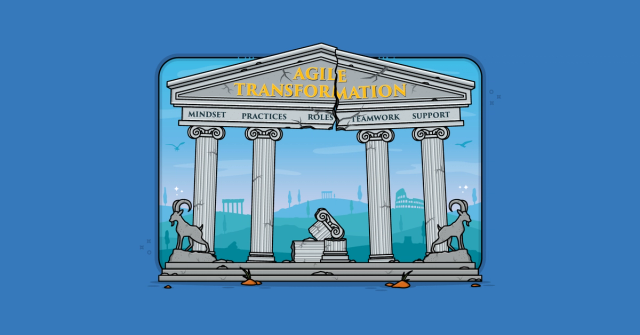
The Five Pillars of a Successful Agile Transformation
Discover the secret to a successful agile transformation and learn what to try if your organization is struggling.

Minimize Spillover in Agile: Break the Habit of Unfinished Work
When too many sprints end with unfinished stories, it’s time to take action. Here’s how.

3 Ways to Ensure Agile Training Works to Transform Your Teams
The best agile training leads to real results. Learn how to ensure your investment pays off.

Why Soft Skills Outlast Technical Skills on Product Development Teams
Soft skills are the ones that can lead to lasting success.

Estimating and Planning in Agile: Why They Still Matter in 2026
By 2026, most agile practitioners have plenty of scar tissue when it comes to estimating and planning.

AI Doesn’t Eliminate Agile Teams — It Increases the Need for Great Ones
Discover how AI is reshaping agile teams, why collaboration matters more than ever, and what leaders must do.

Why Smart Teams Overcommit And How Leaders Make It Worse
Understand how leader pressure can push smart teams into unrealistic commitments.

Short Answers to Big Questions about Agile Leaders
Discover 3 things that define agile leaders and explore their role in change and learning.

Focusing Where We Can Have the Most Impact
Mountain Goat Software is shifting its training and coaching focus to private client work, where teams and leaders can apply agile to their real challenges.
Six Agile Product Development Myths - Busted
Pervasive myths about agile get in the way of success. It’s time to bust six of those myths.

Three Questions to Determine If an Organization Is Agile
A lot of organizations claim to be agile. Here’s a quick way to see if they really are.

Six Attributes of a Great ScrumMaster
Learn the qualities that help Scrum Masters serve teams effectively.

Cultivate Communities of Practice
The most effective type of community of practice within Scrum organizations seems to be one that forms organically.
Agile Teamwork
Learn how agile teams share responsibility, reduce handoffs, and finish valuable work together.

Top 5 changes in the 2020 version of the Scrum Guide
Recently the 2020 version of the Scrum Guide was released. What changes were made that you need to be aware of in order to keep up to date with Scrum?

Agile for Leaders
Give leaders a practical understanding of agile and the decisions that help teams succeed.