
Did you notice that I didn’t share a blog a couple of weeks ago? Probably not, but my commitment has been to write and post a new blog every other Tuesday. And I’ve been pretty consistent with that, unless it’s a holiday or I’m taking a planned break in the summer.
But a few weeks ago, I didn’t post a new blog. I didn’t even get started writing it. I fully intended to. It was even on my Sprint Backlog for the week. But it didn't happen. Here’s why.
My Struggle with a Product Backlog
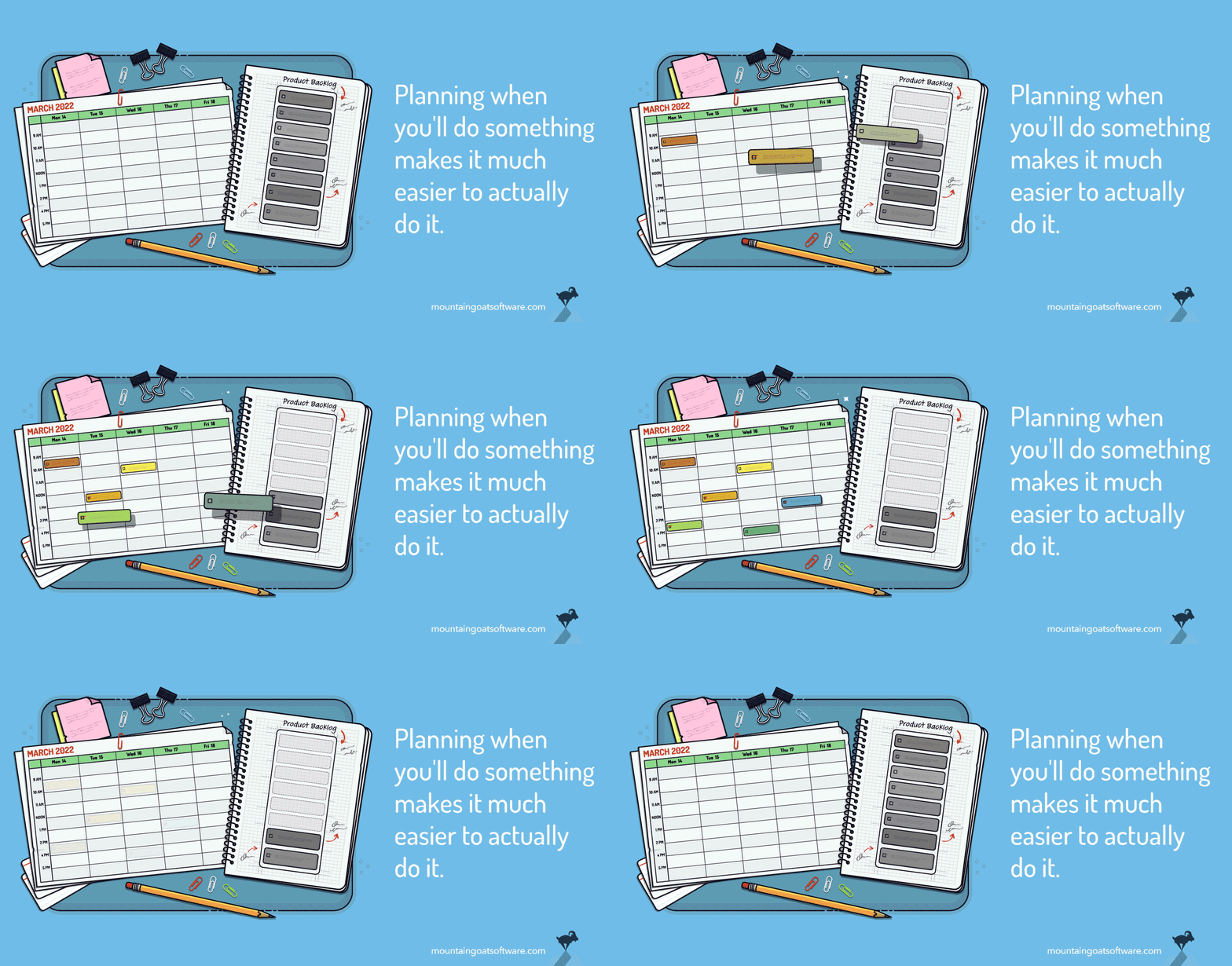
I’ve found that making a backlog each week for myself hasn’t been working as well as it should. Every Monday morning, I’d plan an ambitious week. And then, inevitably, the week would slip away. And some work—sometimes high priority work like writing a blog—would go unfinished.
Fortunately, I found a better way to make sure that high priority work happens.
Implementation Intentions
What I’m trying currently (and it seems to be working) is establishing an* implementation intention* for each of my critical-to-complete backlog items.
Implementation intentions are the idea of Peter Gollwitzer, a psychology professor at New York University. Gollwitzer’s research found that simply saying (or thinking), “I intend to do such-and-such" was not likely to lead to someone doing such-and-such. Gollwitzer writes, "Successful goal attainment requires that problems associated with getting started and persisting until the goal is reached are effectively solved."
Gollwitzer goes on to explain that implementation intentions "specify the when, where, and how of responses leading to goal attainment. They have the structure of 'When situation x arises, I will perform response v!'"
For example, I intend to eat better will usually not lead to eating better. However, forming a plan for how I will implement that intention does make me more likely to do it. So instead of just intending to eat better, I can tell myself, “If I am hungry after dinner (the situation), I will eat an apple (my response).”
Implementation intentions can also be time-based: “At 2 p.m., I will go for a 30-minute walk.”
My Time-Based Implementation Intentions
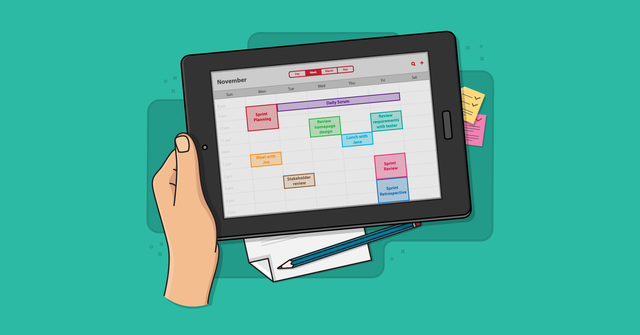
It has been time-based implementation intentions that are helping me complete my high-priority backlog items, like blogs. As I write this, it is 9:26 a.m. on a Friday morning. Yesterday, I planned that I would write between 9:00 and 11:00 a.m., and so that is what I’m doing.
If I had begun today with just a weak intention of ‘write a blog post,’ I probably would have let other work intrude. Instead I planned my sprint work with a time-based intention, and moved this backlog item to done. Time-based intentions work for me, and for many like me.
Once again, Gollwitzer backs me up. He writes about how in a 1999 study of people who had a goal to take a daily vitamin pill, Sheeran and Orbell found that "participants who had been induced to commit themselves to when and where they would take a pill each day missed fewer pills than participants who had formed only the respective goal intentions (i.e., to take a pill each day)." A spoonful of sugar may indeed help the medicine go down, but for me and for others, a time-based implementation intention works better.
Webinars Are a Good Example
Webinars make a great example of the power of implementation intentions. Imagine learning about a webinar you’d like to attend. It’s at 2 p.m. on Tuesday, so you add that to your calendar. Based on average webinar show-up rates, you’re about 40% likely to attend.
But if you miss the webinar, you’re only about half as likely to watch the replay. It’s easier to watch the replay—you can do it whenever you’d like. Yet replay watch rates are only half the live rates.
Why?
Because you set an implementation intention to watch the live session. Tuesday at 2 p.m. is scheduled and reserved for watching the webinar. The replay is just an item on a backlog or to-do list. As such it’s as easy to skip as it is for me to eat something sweet after dinner instead of the more healthful apple.
Implementation Intentions and Agile Projects
There are a couple of ways implementation intentions can support agile teams. They could be formed at the Scrum team’s sprint planning to help the team get to done such as:
-
We will work on these two product backlog items first.
-
We’ll finish this item by Wednesday even if a few nice-to-haves are left out.
-
If at least seven product backlog items aren’t done by Day Six, talk to the product owner about dropping some.
Alternatively, or perhaps additionally, Scrum team members can establish their own implementation intentions. Those could look like:
-
I will do nothing but code from 9:00 to 1:00 tomorrow.
-
Create test data at 2:00 p.m. tomorrow
Some personal implementation intentions can be formed at the start of the week. And that may be best, but I haven’t gotten to that point yet. I set most of mine a day ahead. At the end of each day, I form the implementation intentions for the following day.
What Happens When During a Sprint
FeaturedSucceeding with Scrum is easier when you know when and why to conduct each of the Scrum events during the sprint.

Daily Scrum
FeaturedThe Daily Scrum is a short daily meeting that helps the team inspect progress toward the Sprint Goal and adapt its plan for the next day of work. Done well, it gives team members a shared understanding of what has…

The Sprint Goal: What It Is and How It Can Help You
FeaturedSprint goals are something every Scrum team should try to create. Learn what sprint goals are and what a good sprint goal looks like. Discover why they are helpful for stakeholders and some warning signs that sprint goals aren't working for your team.

Working on a Scrum Team
Help the whole Scrum team build a shared approach to roles, planning, refinement, collaboration, and finishing valuable work together.
What Does a Product Owner Do, When, and Why?
Clarify what product owners do before work starts, during planning, and throughout each sprint.
What Is a High-Performing Agile Team?
How to build and sustain a Scrum team that exceeds the sum of its parts.

Writing the Product Backlog Just in Time and Just Enough
Keep backlog detail just enough and just in time.

The Sprint Goal: What It Is and How It Can Help
Sprint goals are something every Scrum team should try to create. Learn what sprint goals are and what a good sprint goal looks like.

Why Your Product Backlog Should Look Like an Iceberg
Shape the backlog so near-term items are detailed and lower-priority work stays lighter.

New To Agile Or Scrum
Agile helps teams deliver value sooner, learn faster, and adapt when plans change. Use this guide to understand what agile is, how it differs from Scrum, when agile helps, and where to go next if you are just…

Minimize Spillover in Agile: Break the Habit of Unfinished Work
When too many sprints end with unfinished stories, it’s time to take action. Here’s how.

Four Reasons Agile Teams Estimate Product Backlog Items
Estimating product backlog items provides benefits beyond predicting when a project will be finished.


The Goal of Sprint Planning
Sprint planning may look like it’s about tasks and estimates but those are not the goal.
Does Scrum Have Too Many Meetings?
Are teams complaining about Scrum meetings? Learn why that happens, and how to fix it.

How the Story Critic AI Skill Helps Teams Write Better Backlog Items
See how AI coaching can help teams write clearer, smaller, more testable backlog items.

3 Ways to Ensure Agile Training Works to Transform Your Teams
The best agile training leads to real results. Learn how to ensure your investment pays off.

Should Scrum Teams Include a Stretch Goal In Their Sprints?
Decide whether stretch goals help or create pressure in sprint planning.

3 Ways to Help Agile Teams Plan Despite Uncertainty
We might not like ambiguity, but it’s a fact of life. Find out how to plan with uncertainty in mind.

Capacity-Driven Sprint Planning
Plan sprints around real team capacity instead of relying only on past velocity.