
For more than two decades, public training has been central to Mountain Goat Software. In May 2003, I co-trained the first Certified ScrumMaster course with Ken Schwaber. I co-trained the first Certified Scrum Product Owner course with him too. Since then, public classes have been one of the main ways I've tried to help people learn Scrum, agile, user stories, estimating, planning, and everything else I've written and taught about over the years.
Those classes mattered — and they helped spread agile knowledge at a time when many people were hearing these ideas for the first time.
But the place where I believe we can have the greatest impact now has shifted.
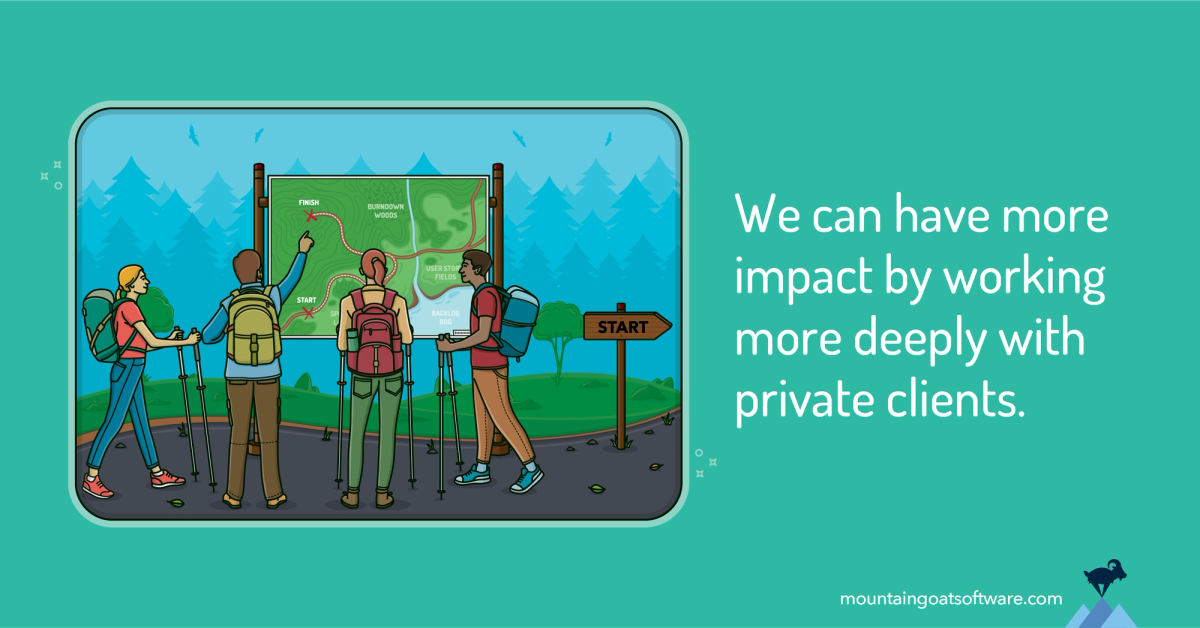
We're ending our public classes and focusing Mountain Goat Software's training and coaching work on private client engagements: private courses, practical workshops, and follow-through support for teams and organizations that want help applying agile and Scrum more effectively.
Why This Shift Makes Sense Now
A lot of individuals understand Scrum and agile quite well.
But while training can give individuals a solid understanding, that alone does not help a team work better together.
Teams have to make decisions about their own backlog, planning, collaboration, and stakeholder expectations. Those are difficult to solve one person at a time.
That's where private client work becomes so valuable. When we work with a company directly, we can focus on the team's actual challenges — the product backlog they really use, the planning problems they're actually trying to solve, the leadership dynamics that are quietly making things harder.
That deeper work is where I'm most excited to spend my time.
What Changes When the Work Is Private
Private training lets teams work on the backlog items, planning decisions, and delivery problems they already need to solve. In Mastering User Stories, for instance, teams work with their own backlog items and user stories — improving the actual work they need to refine, split, estimate, and deliver.
That changes the nature of the class. A team can see where its current stories are too large, too vague, or too focused on output instead of value. Product owners, Scrum Masters, developers, testers, and leaders build a shared understanding of what good stories need to do in their context — not in some hypothetical scenario.
The same principle applies across all our private offerings:
- Working on a Scrum Team helps a team build a stronger, shared way of applying Scrum together.
- Agile for Leaders helps leaders see how their behavior affects the teams they're trying to support.
- Accurate Agile Planning helps teams and leaders make better decisions about dates, scope, forecasts, and uncertainty.
And in all of these, we can add coaching and follow-through support so the learning doesn't end when the class does. A course can create insight. Real change takes repeated application, adjustment, and support over time.
A Recent Engagement That Made This Clear
Last year, we trained roughly 550 people at one organization through a series of classes and follow-through coaching sessions. Their biggest needs centered on backlog health, cross-team collaboration, and leadership alignment.
Those three things were connected. The backlog problems were making collaboration harder. The collaboration gaps were feeding leadership misalignment. Working across all of them — together, over time — produced changes that a two-day public course never could have.
That engagement reinforced something I've believed for a long time: agile improvement is most effective when teams and leaders work on it together, with support that follows them into the real work.
How We Shape Private Engagements
We start by understanding what the client is trying to improve and where teams are getting stuck.
That might mean looking at their backlog, planning approach, team structure, agile leadership expectations, or a particular delivery problem. We then shape the course, workshop, or follow-through support around that need.
Sometimes the right answer is a focused workshop: improving backlog quality, splitting stories, estimating, or preparing for a release-planning conversation. Sometimes it's a private course for one or more teams. Sometimes it includes coaching after the course so teams can apply what they learned with support alongside them.
The format depends on the need. The goal is always the same: help the client make meaningful, lasting progress with agile.
What Stays the Same
I'll continue writing blog posts, sending email tips, and creating YouTube videos. I've been doing that for decades, and I still think it's helpful. There will always be people who find Mountain Goat Software through an article, a tip, a book, or something a colleague forwards to them.
We're also rebuilding the Mountain Goat Software website around this new direction and reorganizing 500+ blog posts into ten topic-based agile guides — covering Scrum, user stories, product backlog, agile planning, leadership, and more. The goal is to make it easier to find the most useful material, whether you're a private client or an individual reader.
What's changing is where we focus our training and coaching work.
If Your Organization Wants Help
The goal hasn't changed: helping people and teams succeed with agile.
If your organization wants help with private training, a practical workshop, or follow-through coaching — whether that means improving user stories and backlog refinement, helping Scrum teams build a stronger shared approach, or helping leaders understand how to support agile teams more effectively — I'd welcome a conversation.

Stakeholder Leadership
FeaturedStakeholders are essential to good product ownership. They bring business context, customer commitments, operational constraints, market knowledge, support issues, risks, and opportunities the team may not see.

A Leader’s Guide to Agile
FeaturedLearn the ten things agile teams need their leaders to understand, and how your actions can help them succeed. Get Mike Cohn’s free 91-page guide to the ten things agile teams most need their leaders to know.

Product Backlog
FeaturedA product backlog is a prioritized list of possible future work for a product. It helps the Product Owner and team decide what to build, fix, learn, or improve next.
How to Use AI for Product Discovery and Writing Better User Stories
Use AI to support product discovery, user interviews, and writing better user stories.
Why Scrum Isn’t Working Even Though You’re Doing Scrum
Story splitting helps teams turn large user stories into smaller, valuable pieces they can finish within a sprint without turning them into tasks.

From Project Manager to Scrum Master -3 Tips for Making the Transition
What does a good project manager need to do to become a great Scrum Master?
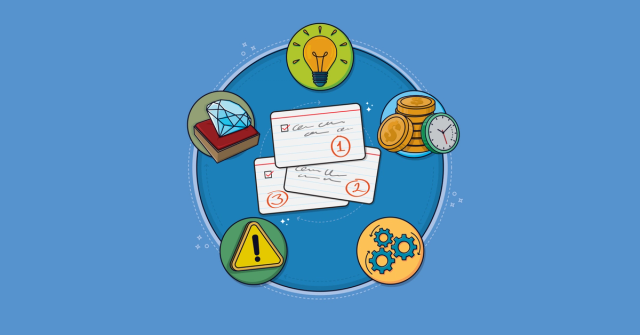
5 Key Factors for Effective Product Backlog Prioritization
Confused about how to prioritize your backlog? These 5 factors will help to focus your efforts.

Why Your Scrum Team Still Works Like Individuals
Learn how handoffs, individual task ownership, and status-report daily scrums keep Scrum teams from collaborating—and what to change next sprint.
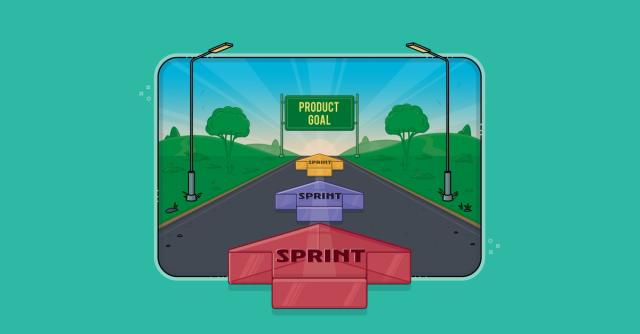
What Does a Product Owner Do, When, and Why?
Clarify what product owners do before work starts, during planning, and throughout each sprint.

Why Your Product Backlog Should Look Like an Iceberg
Shape the backlog so near-term items are detailed and lower-priority work stays lighter.

Leading Agile Initiatives: How Leaders Help Agile Change Succeed
An agile initiative is not mainly a one-time rollout of Scrum, Kanban, SAFe, Jira, new job titles, or a different meeting calendar.
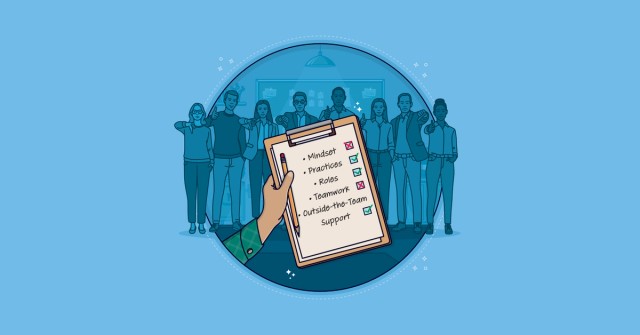
We Tried Agile and It Didn’t Work
“We tried agile and it didn’t work” is one of the most revealing things a leader can hear.
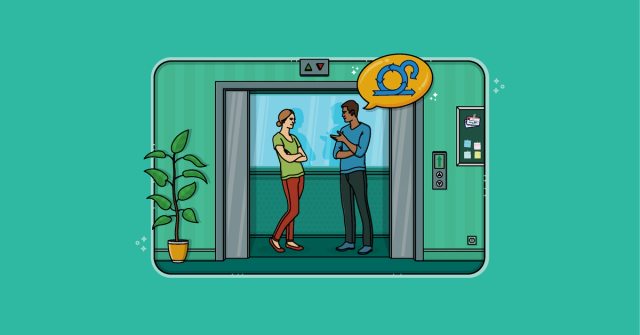
The Sprint Goal: What It Is and How It Can Help
Sprint goals are something every Scrum team should try to create. Learn what sprint goals are and what a good sprint goal looks like.
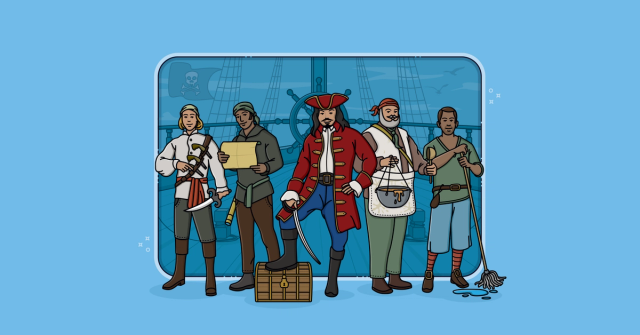
Can the Product Owner and the Scrum Master Be the Same Person?
Discover what pirates have to teach us about why the ScrumMaster and product owner require different skills, and different people.
4 Reasons to Include Developers in Story Writing
See why developers should help write user stories before work reaches the sprint.
When Planning Should Become A Shared Problem
Turn planning pressure into a shared conversation about options and tradeoffs.
User Stories: How to Create Story Maps
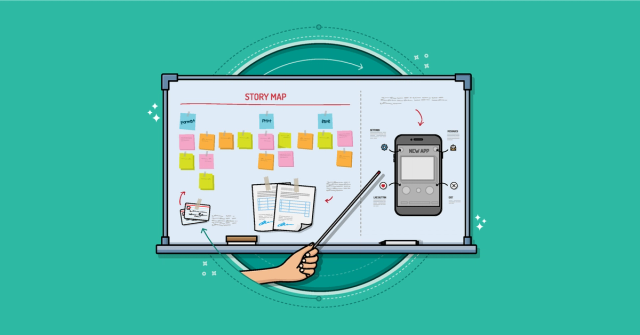
Story maps help to create a shared understanding of the product, visualize user needs, and elicit user story ideas. Discover how to create your own.

3 Ways to Ensure Agile Training Works to Transform Your Teams
The best agile training leads to real results. Learn how to ensure your investment pays off.