
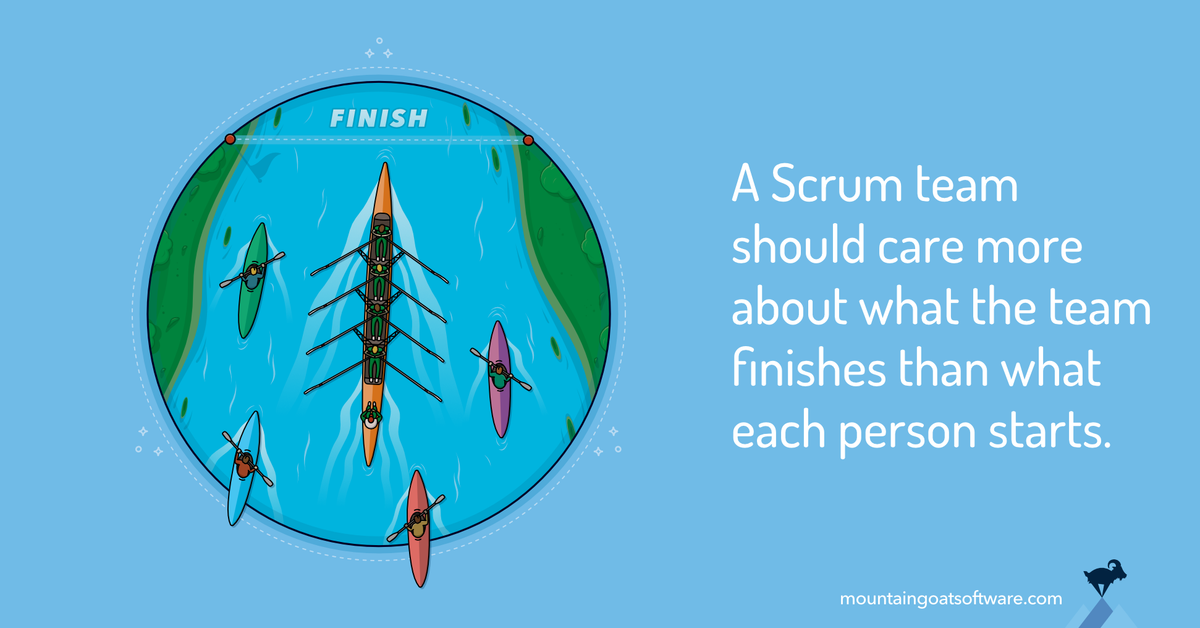
Many organizations have Scrum teams in name, but not yet in behavior.
The people attend sprint planning together. They meet every day for the daily scrum. They hold sprint reviews and sprint retrospectives. They may even work from the same product backlog and use the same sprint board.
From the outside, it looks like Scrum.
But inside the sprint, work still moves from person to person the way it always has. An analyst clarifies the requirement. A developer codes it. A tester waits until something is ready. A product owner gets pulled in late to answer a question that should have been discussed earlier. Everyone is busy, but the team is not really working as a team.
Work starts, waits, changes hands, gets nearly done, and then carries into the next sprint.
That is one reason Scrum can feel disappointing. The organization has adopted the events, roles, and artifacts, but the people doing the work still behave like a group of individuals connected by meetings.
Scrum depends on real teamwork. Without it, the mechanics of Scrum are still there, but many of the benefits are lost.
A Scrum Team Is More Than People Assigned to the Same Sprint
Putting people on the same Scrum team does not automatically make them a team.
A real Scrum team shares responsibility for delivering a valuable increment. The product owner, Scrum Master, and developers have different accountabilities, but they are working toward the same outcome. They are not merely contributing separate pieces and hoping those pieces come together at the end.
This is important because Scrum exposes problems quickly. If people are working independently, Scrum will make that visible. Work piles up. Dependencies appear. Items stay nearly done. Testing gets squeezed into the end of the sprint. Daily scrums become status updates. Sprint goals become words on a board instead of something that guides decisions.
When that happens, the problem is rarely that the team needs more meetings. The problem is usually that the team has not learned how to work together around shared goals, shared constraints, and shared delivery responsibility.
Handoffs Slow Teams Down
One sign that a Scrum team is still working like a group of individuals is the amount of handoff inside the sprint.
One team recently took this to an extreme. UX designers owned a story until the design was complete. It then moved to a database engineer to assess any database impact before being handed off to a programmer. The programmer finished all coding before passing it along to a tester.
Each person did their part, but no one owned getting the story finished.
A little handoff is unavoidable. Specialists still matter, and people bring different skills to the team. But when work routinely moves from analyst to developer to tester to reviewer in a predictable sequence, the team has recreated a small waterfall process inside the sprint.
That creates delay. Someone waits for clarification. Someone waits for code. Someone waits for testing. Someone waits for feedback. Each wait may seem small, but together they stretch the time it takes to finish anything.
Handoffs also create misunderstanding. Each person receives a partial view of the work and makes decisions based on that view. By the time the whole team sees the item together, it may be late in the sprint and expensive to change.
This is how teams end up with lots of started work and very little finished work. Everyone can honestly say they were busy. Everyone can point to tasks they completed. But the team still misses the sprint goal or carries work into the next sprint.
A Scrum team should be looking for ways to reduce those handoffs. That does not mean everyone does everything. It means the team collaborates earlier, overlaps work, keeps important work visible, and asks, “What should we finish next?” before asking, “What can I start next?”
The product owner is part of this too. When the product owner is only consulted at the beginning and end of a story, the team loses chances to simplify, split, or redirect the work while there is still time.
The Daily Scrum Should Help the Team Coordinate
The daily scrum often reveals whether a Scrum team is acting like a team.
When the event becomes a series of individual reports, the team is probably not coordinating enough. One person says what they did yesterday, what they will do today, and whether they have blockers. Then the next person does the same. The Scrum Master listens. Everyone else waits for their turn. No one comments on someone else's work.
That can look orderly, but it rarely changes how the team works that day.
A useful daily scrum helps the developers inspect progress toward the sprint goal and decide how to work together for the next day. The focus is not on proving that everyone was busy. The focus is on the work, the goal, and the risks.
Useful questions sound more like these:
- What is most important to finish next?
- Which item is most at risk?
- Where are we waiting?
- Who needs help?
- What should we stop starting so we can finish something valuable?
Those questions change the purpose of the daily scrum. The event becomes less about reporting and more about coordination. The team leaves with a better plan for the day, not just a collection of individual updates.
A team working like individuals tends to organize around personal tasks. Each person owns their piece. Each person tries to stay busy. Each person can say, “My part is done.”
Watch the “My Tasks” View
Tools can accidentally reinforce individual ownership. A “my tasks” view is useful, but teams also need to look together at what is closest to done, what is blocked, and what matters most to the sprint goal.
Scrum works best when the team cares more about finishing valuable work than keeping every individual fully utilized.
That requires shared ownership. A developer who finishes their task does not simply grab the next unrelated task so they can stay fully utilized. They look at what the team is trying to finish. They ask where help is needed. They may pair, review, test, clarify, split, simplify, or swarm.
Shared ownership changes the conversation. Instead of asking, “What am I assigned to?” the team asks, “What does the team need to finish?”
That is a small shift in language, but a major shift in behavior.
It also reduces the “almost done” problem. Many struggling Scrum teams have several product backlog items nearly done near the end of the sprint. The coding is done, but testing is not. Testing is done, but feedback is missing. Feedback came in, but too late to incorporate.
A team with shared ownership attacks that problem earlier. They do not wait until the last day to discover that too much work is unfinished. They coordinate throughout the sprint so fewer items are in progress and more items are truly done.
Cross-Functional Does Not Mean Everyone Does Everything
Cross-functional is one of the most misunderstood ideas in Scrum.
A cross-functional team has the skills needed to turn product backlog items into a valuable, usable increment. People still have specialties. A database expert, UX designer, tester, and programmer do not suddenly become interchangeable. Cross-functional describes the team’s capability, not each individual’s résumé.
Specialists are often essential. The problem comes when specialization becomes a wall.
A tester can help the team think about acceptance criteria before coding begins. A programmer can help test earlier instead of waiting for a formal handoff. A UX specialist can collaborate with the product owner and developers before the sprint is packed with assumptions. A database expert can help others understand constraints so the work does not bottleneck around one person.
That is what cross-functional collaboration looks like. People still bring depth in different areas, but they do not protect narrow task boundaries at the expense of the team’s goal.
The aim is finished value, not interchangeable people.
Leaders Shape Whether Real Teamwork Is Possible
Teams are often blamed for not collaborating, but many teamwork problems are reinforced by the organization around the team.
Leaders may say they want stable Scrum teams, but assign people part-time across multiple teams. They may say they want team ownership, but reward individual utilization. They may say the sprint goal matters, but pull people away for urgent work that is unrelated to the sprint.
Those choices make real teamwork harder.
A Scrum team needs:
- Enough stability to learn how to work together
- Enough focus to make and meet realistic commitments
- Permission to finish important work instead of keeping everyone individually busy
- Leaders who care about outcomes, not just activity
This is especially important when people come from functional departments. Developers, testers, analysts, UX specialists, architects, and product owners may all have different managers, incentives, and habits. Without leadership support, those functional loyalties can remain stronger than the shared ownership needed on a Scrum team.
Leaders do not need to manage the team’s daily work. But they do need to create conditions in which teamwork is possible.
How to Start Acting More Like a Team Next Sprint
A Scrum team does not become a real team because someone gives a speech about collaboration. The team becomes more team-oriented by changing how it handles real work.
Start small.
Pick one important product backlog item in the next sprint and treat it as a team effort from the beginning. Discuss the risks early. Clarify acceptance criteria together. Identify where handoffs would normally happen and look for ways to reduce them. If the item gets stuck, swarm on it instead of letting it wait for the next specialist.
Reframe the daily scrum around the sprint goal and the work most at risk. Talk less about what each person did and more about what the team needs to finish.
Limit work in progress. A team that starts too much creates more handoffs, more context switching, and more unfinished work. Finishing fewer items sooner is often better than starting everything and hoping it comes together later.
During the sprint retrospective, look specifically at where work waited. Where did an item sit without progress? Where did a handoff create delay? Where did the team discover a problem later than it should have? Those delays are clues about where teamwork needs to improve.
The goal is not to become perfect in one sprint. The goal is to make teamwork more visible and more deliberate.
Scrum Works Better When the Team Works Like a Team
Scrum gives teams a structure for planning, coordinating, reviewing, and improving their work. But the structure alone is not enough.
A Scrum team needs shared ownership. It needs collaboration across skill boundaries. It needs developers who coordinate around the sprint goal. It needs a product owner who helps the team focus on value. It needs a Scrum Master who helps the team improve how it works. And it needs leaders who create conditions that support real teamwork.
When those pieces are missing, Scrum can become a set of meetings around individual work.
When those pieces are present, Scrum feels different. The team finishes together. Problems surface earlier. The daily scrum becomes useful. The sprint goal guides decisions. Work flows with fewer delays. People still have specialties, but they use those specialties in service of the team’s outcome.
If your Scrum teams are holding the events but still working like groups of individuals, the next step is helping the whole team build a shared understanding of how Scrum is supposed to work and how they need to work together.
That is why Working on a Scrum Team is designed for the whole team, not just one role. It helps product owners, Scrum Masters, and developers move beyond attending Scrum events and start using Scrum as a practical way to collaborate, focus, and deliver.

Developers
FeaturedIn Scrum, Developers are the people who create the product increment. That word can be confusing.

A Leader’s Guide to Agile
FeaturedLearn the ten things agile teams need their leaders to understand, and how your actions can help them succeed. Get Mike Cohn’s free 91-page guide to the ten things agile teams most need their leaders to know.

Agile Teams And Collaboration
FeaturedAgile teams do more than divide work among specialists. They collaborate around shared goals, learn together, and take responsibility for finishing valuable work.
Agile Teamwork
Learn how agile teams share responsibility, reduce handoffs, and finish valuable work together.

Should the Daily Scrum Be Person-by-Person or Story-by-Story?
Choose whether to discuss work person-by-person or story-by-story in daily scrum.

Leading Agile Initiatives: How Leaders Help Agile Change Succeed
An agile initiative is not mainly a one-time rollout of Scrum, Kanban, SAFe, Jira, new job titles, or a different meeting calendar.

What Is Cross-Functional Collaboration in Agile?
Clarify what cross-functional teams really need and what they do not.
What Happens When During a Sprint
Succeeding with Scrum is easier when you know when and why to conduct each of the Scrum events during the sprint.
Does Scrum Have Too Many Meetings?
Are teams complaining about Scrum meetings? Learn why that happens, and how to fix it.
What Are Agile Story Points?
Understand what story points measure and why they are often misunderstood.

Multiple Levels of Done
Define done at more than one level so expectations stay clear from story to release.

What Does Scrum Mean by Cross Functional Teams?
What exactly does cross functional mean and why does it matter?
Writing the Product Backlog Just in Time and Just Enough
Keep backlog detail just enough and just in time.
Should a Team Assign Work During Sprint Planning?
Some teams assign all tasks upfront. Others don’t.

How to Get Teams Aligned on What It Means to Be Agile
Align leaders, teams, and stakeholders around what agile really means.

Working on a Scrum Team
Help the whole Scrum team build a shared approach to roles, planning, refinement, collaboration, and finishing valuable work together.
Why Scrum Isn’t Working Even Though You’re Doing Scrum
Story splitting helps teams turn large user stories into smaller, valuable pieces they can finish within a sprint without turning them into tasks.

Scrum Team Improvement
Strengthen team collaboration, Scrum practices, role clarity, and delivery.

Team Reset
Help a stuck Scrum team diagnose recurring problems, realign expectations, and choose practical changes.

Team Improvement Sprints
Make focused improvements through short coaching engagements built around the team’s most important challenge.