

Shared ownership helps agile teams move from “my work” to “our work.”
On a strong agile team, people still bring different skills, roles, and accountabilities. But they do not treat success as the completion of individual tasks. They pay attention to the team’s goal, the flow of product backlog items, and what it will take to finish valuable work.
Use this page to understand what shared ownership means, why it matters, how it changes day-to-day teamwork, and how to spot the habits that keep teams stuck in individual task thinking.
Who This Page Is For
This page is for people who want agile teams to take responsibility for finishing work together rather than passing work from one person or specialty to another.
It is especially useful for:
- Scrum Masters and agile coaches helping teams improve ownership, collaboration, and flow
- Product Owners who want better partnership with Developers throughout the sprint
- Developers, testers, analysts, designers, and other specialists who want to reduce handoffs and finish work together
- Managers and leaders who want teams to take ownership without creating blame or role confusion
- Teams that often hear “I finished my part” while product backlog items remain unfinished
What Is Shared Ownership?
Shared ownership means the team takes responsibility for finishing valuable work together.
It does not mean every person does every job. It does not mean role boundaries disappear. It does not mean no one is individually responsible for anything.
It means everyone on the team pays attention to the team’s outcome.
A tester may help clarify expected behavior before coding starts. A programmer may help split a story so it can finish sooner. A Product Owner may work with Developers to reduce scope when the team discovers new information. A UX designer may simplify a workflow so the most valuable part of the item can still be completed. A database specialist may pair with another team member so work does not wait on one person.
Shared ownership changes the question from “Am I done?” to “Are we done?”
Shared Ownership Is Whole-Team Responsibility
Another way to describe shared ownership is whole-team responsibility.
A team may still look to particular people for certain kinds of work. The Product Owner is the person to talk to about product ordering and value. A tester may bring deep testing skill. A designer may bring user experience expertise. An architect may help the team think through technical tradeoffs.
But the team as a whole still cares about the result.
Quality is not only the tester’s responsibility. Clean code is not only the programmer’s responsibility. Usability is not only the designer’s responsibility. The Product Backlog is not something the Product Owner carries alone while everyone else waits to be told what to do.
Each person contributes differently, but the team succeeds or fails together.
The goal is not to remove individual accountability. The goal is to avoid a culture where each person can be individually “done” while the team’s work is not.
The Problem with “I Finished My Tasks”
One of the clearest signs of weak shared ownership is hearing someone say, “But I finished my tasks,” when the team misses its sprint goal or leaves backlog items unfinished.
The statement may be true. The person may have completed every task they signed up for.
But agile teams are not formed to complete individual task lists. They are formed to deliver valuable product increments.
Tasks are useful. They help the team think through the work. But tasks are not the main unit of value. Product backlog items are closer to value. The Sprint Goal is closer to purpose. A usable Increment is closer to what stakeholders and customers care about.
When people optimize for their own tasks, several problems appear:
- Work piles up near the end of the sprint.
- Testing, review, and integration happen late.
- People protect their own task lists instead of helping the team finish.
- Team members stop noticing where the real bottleneck is.
- Partly finished work accumulates.
- Sprint goals are missed even though many individuals look busy.
Shared ownership asks team members to look beyond their assigned tasks and pay attention to what the team is trying to finish.
Shared Ownership Does Not Mean Role Confusion
Shared ownership works best when accountabilities are clear.
Clear accountabilities make collaboration easier. The Product Owner guides value and ordering, Developers create the Increment, and the Scrum Master helps the team improve its effectiveness.
Shared ownership does not erase those accountabilities. It strengthens them.
For example:
- The Product Owner remains accountable for product value, but Developers help refine backlog items, split work, identify risks, and clarify assumptions.
- Developers remain accountable for the Increment, but the Product Owner collaborates on tradeoffs when new information appears.
- The Scrum Master helps the team improve collaboration, but the team owns its working agreements and day-to-day behavior.
- Specialists contribute deep skill, but the team still pays attention to the whole item.
Shared ownership means the team works together within clear accountabilities, not around them.
Shared Ownership Starts with the Sprint Goal
Shared ownership is easier when the team has a clear goal.
Without a shared goal, people naturally fall back to individual tasks. Each person works on what they picked up, what they were assigned, or what seems most familiar. The team may be busy, but it may not be moving toward the same outcome.
A good Sprint Goal gives the team a reason to collaborate.
It helps the team ask:
- What matters most this sprint?
- Which product backlog items support the goal?
- What should we finish first?
- What tradeoffs are available if we learn something new?
- What can we simplify without losing the value of the sprint?
- Where should we swarm if the goal is at risk?
The Sprint Goal does not eliminate individual work. It gives individual work a shared purpose.
Shared Ownership Changes Sprint Planning and the Daily Scrum
Sprint Planning is not a task assignment meeting.
The team may identify tasks. That is useful. But the real work of Sprint Planning is to understand the goal, select valuable work, discuss risks, and create an initial plan for turning selected product backlog items into a done Increment.
Shared ownership changes the tone of Sprint Planning from “Which tasks will I own?” to “What outcome are we trying to create, and how will we finish the most valuable work?”
The Daily Scrum is not a status meeting for reporting individual progress. It is a planning event for Developers to inspect progress toward the Sprint Goal and adapt the plan for the next day’s work.
A team with shared ownership talks about the Sprint Goal, product backlog items, flow, risks, and tradeoffs. Individual progress still matters, but it is not the center of the conversation.
Shared Ownership Changes the Definition of Done
The Definition of Done is one of the best tools for strengthening shared ownership.
Without a Definition of Done, individuals may use private definitions of completion: “Coding is done,” “Testing is mostly done,” “It works on my machine,” or “It just needs review.”
Those statements may be useful as progress signals, but they are not the same as done.
A clear Definition of Done gives the team a shared standard. It helps everyone understand what must be true before a product backlog item is complete.
The team understands what must be true for this item to be considered complete.
Shared ownership means the team protects that standard together.
Shared Ownership Reduces Handoffs and Encourages Swarming
Handoffs weaken shared ownership.
When work moves from one specialty to another, people tend to focus on their own step. Shared ownership reduces handoffs by keeping the right people connected to the work.
Swarming means team members temporarily focus together on the work that most needs attention. A team may swarm when a product backlog item is close to done, the Sprint Goal is at risk, testing reveals unexpected problems, or a specialist has become a bottleneck.
Swarming does not mean everyone piles onto the same task all day. It means the team is willing to shift attention from individual efficiency to team flow.
A useful question is: What should we stop starting so we can start finishing?
Shared Ownership Depends on Trust
Shared ownership requires trust.
People need to trust that helping someone else will be valued, even if it means their own task list moves more slowly. They need to trust that asking for help will not be treated as weakness. They need to trust that raising a risk will not lead to blame.
Small habits help:
- Ask for help early.
- Offer help when someone is stuck.
- Make risks visible.
- Avoid blame when problems appear.
- Keep decisions visible.
- Give credit for helping the team finish.
- Talk about unfinished work honestly.
- Use retrospectives to improve the system, not identify a culprit.
Shared ownership is hard to build in a blame culture. People protect themselves when they expect to be punished.
Leaders Shape Shared Ownership
Leaders shape whether shared ownership is likely to grow.
If performance reviews, rewards, staffing, and management attention all focus on individual task completion, people will optimize for individual task completion. If specialists are assigned to five teams, they will become bottlenecks. If teams lack authority to make ordinary work decisions, ownership will be limited.
Leaders support shared ownership when they:
- Reward team outcomes as well as individual contribution
- Keep teams stable long enough to build trust
- Avoid spreading people across too many teams
- Give teams enough authority to manage their work
- Ask about finished backlog items, not only individual utilization
- Encourage swarming when the Sprint Goal is at risk
- Remove organizational impediments that create handoffs
- Treat missed goals as learning opportunities, not automatic blame events
Shared ownership is not created by telling a team to “act like owners.” It is created by giving the team the structure, authority, trust, and goals that make ownership possible.
Common Shared Ownership Problems
People Protect Individual Task Lists
When people focus only on their own tasks, the team may look busy while valuable work remains unfinished. For more detail, see Minimize Spillover in Agile: Break the Habit of Unfinished Work.
The Team Starts Too Much Work
Too much work in progress weakens ownership. Everyone has something to do, but little gets finished.
Testing Happens at the End
Late testing turns quality into someone else’s problem.
Specialists Become Bottlenecks
When only one person can do a type of work, the team becomes fragile.
The Product Owner Is Too Distant
If the team regularly waits for product decisions, shared ownership becomes difficult.
Leaders Reward Individual Heroics
If the organization rewards people for saving the day alone, teams will learn to value heroics over teamwork. For more detail, see Why Smart Teams Overcommit and How Leaders Make It Worse.
Shared Ownership Becomes Shared Blame
Shared ownership should not become a way to blame the whole team vaguely. The goal is learning and improvement, not spreading blame evenly. For more detail, see When Planning Should Become a Shared Problem.
No One Makes Decisions
Shared ownership does not require consensus on every decision. Clarify decision rights.
How to Build Shared Ownership
Shared ownership grows through repeated behavior, not slogans.
Focus on Finished Product Backlog Items
Track and discuss the movement of product backlog items, not just tasks.
Make the Sprint Goal Visible
A visible Sprint Goal gives the team a shared reference point.
Discuss Examples Early
Examples create shared understanding.
Limit Work in Progress
The more work the team starts, the harder it is to own the outcome together.
Swarm When Work Is at Risk
When an item is stuck or the Sprint Goal is at risk, have the team discuss whether people should shift attention.
Use Retrospectives to Improve Ownership
Retrospectives should examine how the team works together.
Align Rewards with Team Outcomes
Managers and leaders should look for ways to recognize both individual contribution and team results.
Is This Team Sharing Ownership?
Use these questions to identify where shared ownership may be strong or weak.
- Does the team focus on finishing product backlog items, not just individual tasks?
- Does the team understand the Sprint Goal and use it to guide decisions?
- Do team members help with work that is at risk, even when it is not “their task”?
- Are testing, review, and integration treated as team concerns?
- Do specialists help the team learn, or does work wait for them?
- Does the Product Owner collaborate with Developers on tradeoffs during the sprint?
- Does the team limit work in progress so more items can finish?
- Are impediments, risks, and delays made visible early?
- Do leaders reward team outcomes as well as individual effort?
- Does the team ask, “Are we done?” more often than “Am I done?”
This is not a scorecard. Use it to find the next conversation about ownership, teamwork, and finishing valuable work.
FAQ
What is shared ownership on an agile team?
Shared ownership means the team takes responsibility for finishing valuable work together. Team members still have different skills and accountabilities, but they pay attention to the team’s goal and help move product backlog items to done.
Is shared ownership the same as everyone doing everything?
No. Shared ownership does not mean everyone does every job. It means everyone cares about the team’s outcome.
How is shared ownership different from individual accountability?
Individual accountability means people take responsibility for their own behavior, skills, follow-through, and commitments. Shared ownership means the team also takes responsibility for the outcome. Both matter.
Why is “I finished my tasks” a problem?
The statement may be true, but it often reveals individual task thinking. Agile teams are not trying to maximize completed task lists. They are trying to deliver valuable product increments.
How does shared ownership affect the daily Scrum?
The Daily Scrum becomes more useful when the team focuses on progress toward the Sprint Goal and the work most in need of attention.
How do leaders support shared ownership?
Leaders support shared ownership by keeping teams stable, reducing multi-teaming, rewarding team outcomes, giving teams authority to manage their work, and treating missed goals as opportunities to improve the system.

Why Your Scrum Team Still Works Like Individuals
FeaturedLearn how handoffs, individual task ownership, and status-report daily scrums keep Scrum teams from collaborating—and what to change next sprint.
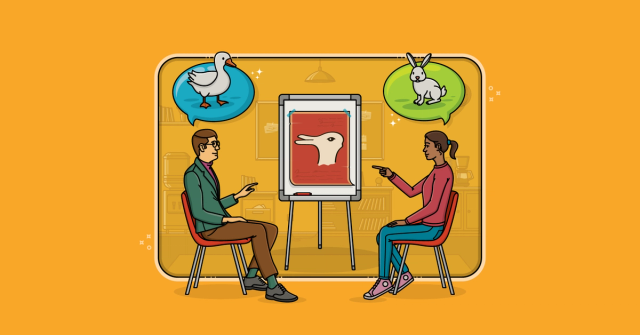
How to Get Teams Aligned on What It Means to Be Agile
FeaturedAlign leaders, teams, and stakeholders around what agile really means.
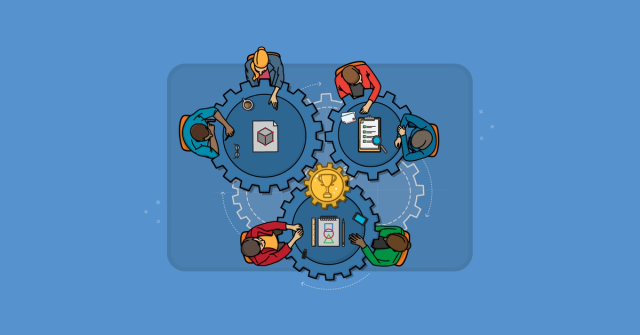
Agile Teamwork
FeaturedLearn how agile teams share responsibility, reduce handoffs, and finish valuable work together.

Should the Daily Scrum Be Person-by-Person or Story-by-Story?
Choose whether to discuss work person-by-person or story-by-story in daily scrum.

Leading Agile Initiatives: How Leaders Help Agile Change Succeed
An agile initiative is not mainly a one-time rollout of Scrum, Kanban, SAFe, Jira, new job titles, or a different meeting calendar.

What Product Owners Do & 7 Mistakes to Avoid
Use seven common product owner mistakes to spot where ownership, prioritization, or collaboration may be breaking down.

AI Doesn’t Eliminate Agile Teams — It Increases the Need for Great Ones
Discover how AI is reshaping agile teams, why collaboration matters more than ever, and what leaders must do.
Why Scrum Isn’t Working Even Though You’re Doing Scrum
Story splitting helps teams turn large user stories into smaller, valuable pieces they can finish within a sprint without turning them into tasks.
Self-Organizing Teams, their Benefits, and a Leader’s Role
Explore self-managing teams, including the role of leaders and outcomes of effective teamwork.

Why Smart Teams Overcommit And How Leaders Make It Worse
Understand how leader pressure can push smart teams into unrealistic commitments.

Nine Questions Scrum Masters and Product Owners Should Be Asking
Use better questions to improve collaboration, decision-making, and team ownership.