
Estimates on Split Stories Do Not Need to Equal the Original
It is good practice to first write large user stories (commonly known as epics) and then to split them into smaller pieces, a process known as product backlog refinement or grooming. When

product backlog items are split, they are often re-estimated.
I’m often asked if the sum of the estimates on the smaller stories must equal the estimate on the original, larger story.
No.
Part of the reason for splitting the stories is to understand them better. Team members discuss the story with the product owner. As a product owner clarifies a user story, the team will know more about the work they are to do.
That improved knowledge should be reflected in any estimates they provide. If those estimates don’t sum to the same value as the original story, so be it.
But What About the Burndown?
But, I hear you asking, what about the release burndown chart? A boss, client or customer was told that a story was equal to 20 points. Now that the team split it apart, it’s become bigger.
Well, first, and I always feel compelled to say this: We should always stress to our bosses, clients and customers that estimates are estimates and not commitments.
When we told them the story would be 20 points, that meant perhaps 20, perhaps 15, perhaps 25. Perhaps even 10 or 40 if things went particularly well or poorly.
OK, you’ve probably delivered that message, and it may have gone in one ear and out the other of your boss, client or customer. So here’s something else you should be doing that can protect you against a story becoming larger when split and its parts are re-estimated.
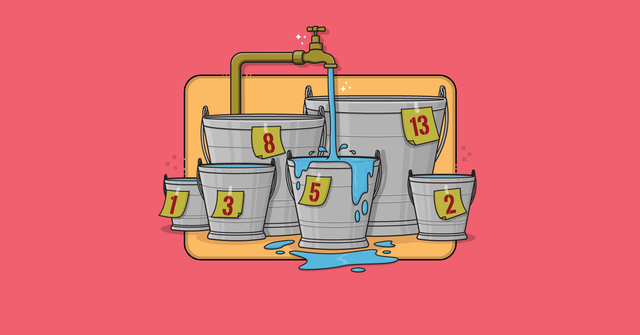
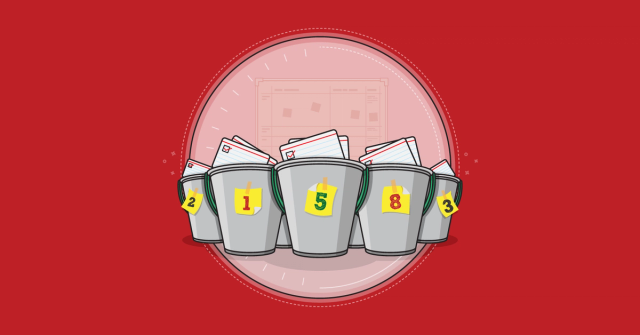
I’ve always written and trained that the numbers in Planning Poker are best thought of as buckets of water.
You have, for example an 8 and a 13 but not a 10 card. If you have a story that you think is a 10, you need to estimate it as a 13. This slight rounding up (which only occurs on medium to large numbers) will mitigate the effect of stories becoming larger when split.
Consider the example of a story a team thinks is a 15. If they play Planning Poker the way I recommend, they will call that large story a 20.
Later, they split it into multiple smaller stories. Let’s say they split it into stories they estimate as 8, 8 and 5. That’s 21. That’s significantly larger than the 15 they really thought it was, but not much larger at all than the 20 they put on the story.
In practice, I’ve found this slight pessimistic bias to work well to counter the natural tendency I believe many developers have to underestimate, and to provide a balance against those who will be overly shocked when any actual overruns its estimate.

Story Points
FeaturedStory points help agile teams estimate product backlog items by comparing one item with another. They are useful because teams rarely need perfect predictions.

Product Backlog Refinement
FeaturedLearn about product backlog refinement: how, when, and why the agile team and product owner refine the product backlog in Scrum.

Product Backlog
FeaturedThe product backlog is the Scrum Team’s ordered list of possible future work for the product. It includes the work the Product Owner may ask the Scrum Team to build, fix, research, improve, or learn about next.
Story Point Estimates Are Best Thought of as Ranges
When estimating in story points, teams should think in terms of ranges and rounding up. Here’s why.
7 Ways to Get the Best Estimates of Story Size
Agile teams often struggle to estimate product backlog items. Here are 7 ways to make solid improvements.

Estimating & Planning
Improve estimates, forecasts, release planning, and conversations about scope, timing, and risk.

Estimating
Build practical agile estimating skills with story points, planning poker, triangulation, velocity, and techniques for making useful forecasts without chasing false precision.

2 Times to Play Planning Poker and 1 Time Not To
I recommend using Planning Poker on product backlog items rather than on the tasks that make up a sprint backlog.

What Are Agile Story Points?
Understand what story points measure and why they are often misunderstood.

Don't Average During Planning Poker
While I want teams to come to agreement, I don't care how heartfelt the agreement is.

Four Reasons Agile Teams Estimate Product Backlog Items
Estimating product backlog items provides benefits beyond predicting when a project will be finished.

Two Examples of Splitting Epics
See real examples of splitting large stories into smaller ones.
The Two Ways to Add Detail to User Stories
User stories can be deliberately vague at first but detail needs to be added eventually. There are two ways to do that.

Why the Whole Team Should Participate When Estimating
Even though not everyone may work on a product backlog item, it’s still worth having the full team estimate. Here’s why.
When Should We Estimate the Product Backlog
Estimate backlog items at the right time and level of detail.
Agile Estimating and Planning Chapters
Read sample chapters from Mike Cohn's Agile Estimating and Planning and explore practical guidance for estimating, planning, and forecasting agile work. Please provide your name and email and we’ll send you the…

3 Roles That Need to be Involved in Agile Estimating with Planning Poker
Clarify who should be in Planning Poker so estimates include the right knowledge.

Plan Visualizer
The Plan Visualizer is a free agile forecasting tool for testing whether a target scope can be completed by a target deadline. It plots the plan against a low and high velocity estimate so teams and stakeholders can…

Accurate Agile Planning
Help teams create credible forecasts, plan under uncertainty, and make better decisions about scope, timing, risk, and tradeoffs.

Velocity Range Calculator
Use this to calculate a velocity range from historical sprint data and support milestone forecasting.