
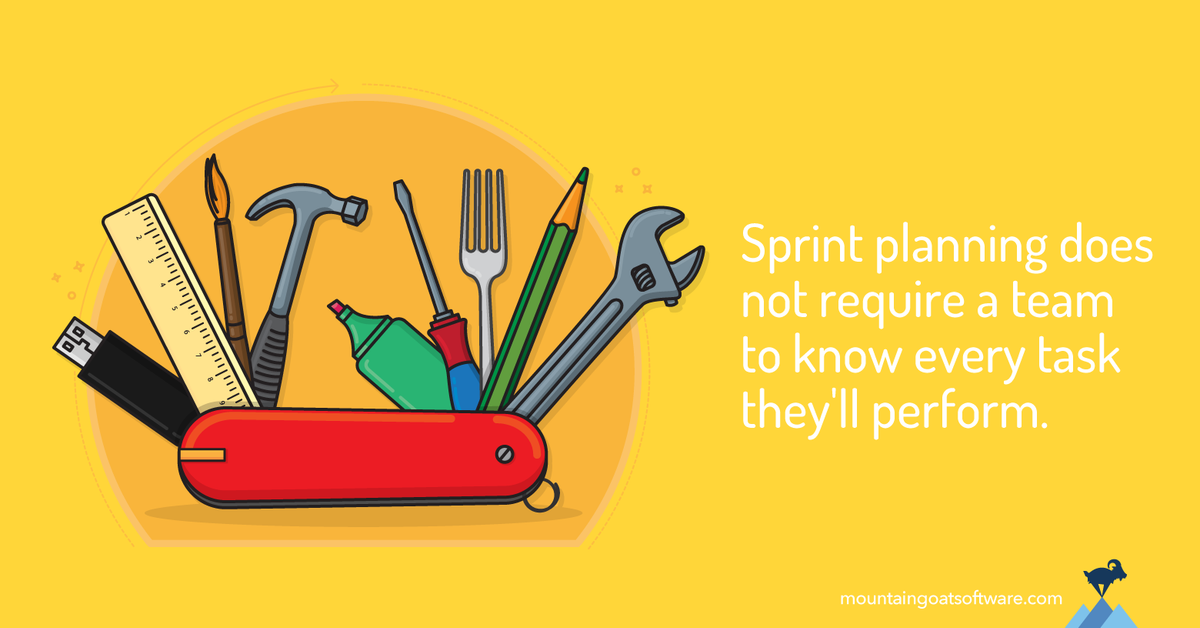
A couple of weeks ago, I participated in a painful sprint planning meeting. You might have been in the same type of meeting. The team was going to great lengths to identify every task they'd need to do in the sprint. And they were debating endlessly over the precise number of hours each task would take.
That level of detail is not necessary.
The purpose of sprint planning is to select a set of product backlog items to work on and have a rough idea of how to achieve them. Achieving this does not require the team to know every task they'll perform. And it certainly doesn't require the team to know if one of those tasks will take four hours instead of five hours.
The Answer Is Not “It Depends”
I’m frequently asked how long teams should spend in sprint planning. Rather than give some crappy answer like “It depends” or “Just enough that your sprint is well planned,” here’s a practical way to determine if you’re spending the right amount of time in sprint planning ...
From looking at planning meetings over many years and at teams I consider successful, my advice is that teams should identify about two-thirds of a sprint’s tasks during sprint planning. That means one-third of the tasks that will be done during the sprint will be left to be identified during the sprint.
An Example
Consider this as an example: At the end of a sprint, a team has finished 60 tasks that delivered some number of product backlog items. My recommendation is that about two-thirds of those tasks (40, in this case) should have been identified during the sprint planning meeting. The remaining one-third (20 tasks) should have been left to be discovered during the sprint.
Sure, the ScrumMaster could have locked the door on the planning meeting and made the team think harder and longer, and they would have come up with perhaps another 10 tasks. But at what cost? It’s not worth it. The goal in sprint planning is to select a set of product backlog items to deliver during the sprint. The secondary goals are to get in and get out of the meeting as quickly as possible.
If your team is accustomed to filling your sprint extremely full, you may need to back off of that a bit. Leave the sprint a bit less full. In our courses on agile planning, we refer to this as “unplanned time.”
The idea is that your team is going to plan a sprint by more quickly identifying all the big things they need to do. Some little tasks will remain unidentified. Some could be identified if the team thought harder and longer--but it’s not worth it. They’d never think of every task, anyway.
Get in. Get out. Get started.
Leave Space for Unplanned Work
Leave room in your sprint plan for the tasks the team hasn’t thought of. Leave room for the tasks they have thought of but that might get bigger. How much room? Take a guess. Next sprint, adjust that guess up or down and iterate to about the right amount over a few sprints.
Note that I am referring to the number of tasks, not the hours within the sprint. The tasks that a team does not think of during sprint planning will tend to be smaller tasks. No one forgets “program the thing.” They forget the smaller tasks associated with that.
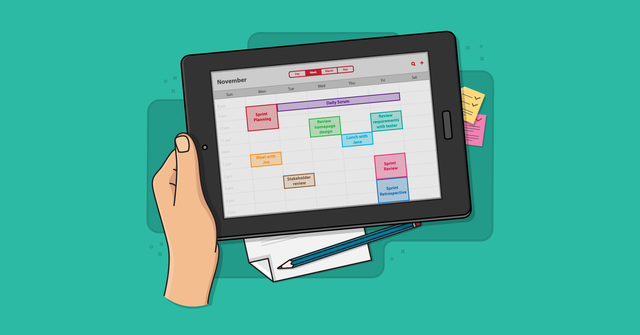
Does Scrum Have Too Many Meetings?
FeaturedAre teams complaining about Scrum meetings? Learn why that happens, and how to fix it.

Sprint Planning Meeting
FeaturedSprint Planning starts the sprint. During Sprint Planning, the Scrum Team decides why the sprint is valuable, what can be done during the sprint, and how Developers will begin doing the work.
Estimating & Planning in Agile: A 2026 Field Guide
FeaturedShare a practical 2026 field guide to agile estimating and planning, with current guidance for making useful forecasts without false certainty. Download a PDF of this you can share.

Your Team Won’t Think of Everything in Sprint Planning Meetings. And That’s OK.
Your team is probably spending too much time in sprint planning meetings. Here’s how to spend less time but plan better.

The Goal of Sprint Planning
Sprint planning may look like it’s about tasks and estimates but those are not the goal.


Capacity-Driven Sprint Planning
Plan sprints around real team capacity instead of relying only on past velocity.

How to Stop Struggling with Sprint Planning
What are the danger signs that sprint planning is a struggle for your teams? And how can you turn it around?

Should a Team Assign Work During Sprint Planning?
Some teams assign all tasks upfront. Others don’t.
Writing the Product Backlog Just in Time and Just Enough
Keep backlog detail just enough and just in time.

Should Scrum Teams Include a Stretch Goal In Their Sprints?
Decide whether stretch goals help or create pressure in sprint planning.

The Sprint Goal: What It Is and How It Can Help
Sprint goals are something every Scrum team should try to create. Learn what sprint goals are and what a good sprint goal looks like.

Why I Don’t Emphasize Sprint Goals
Sprint goals are considered a mandatory part of Scrum. Here’s why I disagree.

Be a Great Product Owner: Six Things Teams and Scrum Masters Need
See what teams and Scrum Masters need most from a product owner to make delivery smoother.
Should Your Team Adopt No-Meeting Weeks?
It can be very tempting to schedule a week without any meetings. But there are better ideas.

The Five Possible Estimates and Which One Your Team Should Use
Unless team members have discussed it, they are almost certainly providing different types of estimates.

AI Doesn’t Eliminate Agile Teams — It Increases the Need for Great Ones
Discover how AI is reshaping agile teams, why collaboration matters more than ever, and what leaders must do.

When Should We Estimate the Product Backlog
Estimate backlog items at the right time and level of detail.

How Much Can You Really Tinker with Scrum?
Does Scrum work if you don’t have a Scrum Master? What about sprints?

Why Agile Teams Should Estimate at Two Different Levels
It’s important for most agile teams to estimate both their product and sprint backlogs. But why?