

Agile succeeds when the people around the team change how they lead, plan, collaborate, and make decisions.
A team can adopt Scrum events, estimate work, create a product backlog, and deliver in short iterations. Those practices help, but they are not enough. Agile depends on trust, clear product direction, working software, regular feedback, and an organization willing to learn as it goes.
Here are the practices that help agile take root and produce better results.
Trust the Team Without Abandoning Leadership
Agile teams need room to solve problems.
That does not mean managers disappear. It means managers stop controlling every decision and start creating the conditions in which a team can succeed.
A good agile leader provides direction without micromanaging. The team needs to understand the product goal, the business constraints, and what matters most. Once that direction is clear, the team needs space to decide how best to do the work.
Managers help agile teams most when they:
- Clarify goals and constraints
- Remove organizational obstacles
- Protect the team from constant priority shifts
- Encourage transparency about problems
- Let the team make implementation decisions
A manager who attends every Daily Scrum to inspect performance will usually get less honesty, not more control. Team members learn to report status instead of raising problems.
A better approach is to ask, “What is getting in the team’s way?” and then do something about the answer.
Don’t Expect Agile to Be a Silver Bullet
Agile will not fix every problem immediately.
A team may still miss goals. Work may still be harder than expected. Some practices may feel awkward at first. None of that means agile has failed.
Agile makes problems visible. That is one of its advantages.
If a team cannot finish the work it planned, agile exposes that. If stakeholders disagree about what matters most, agile exposes that. If the product owner is unavailable, agile exposes that. If the organization rewards individual heroics over team results, agile exposes that too.
Treat those discoveries as useful information.
A team is not succeeding because every sprint goes perfectly. A team is succeeding when it learns from what happened and changes how it works.
Give the Team Clear Product Direction
Self-organizing teams still need leadership.
A team can decide how to accomplish a goal, but it should not have to guess what goal matters. That direction often comes from the product owner, with support from leaders and stakeholders.
The team needs to know:
- What product outcome matters most
- Who the product is for
- Which tradeoffs are acceptable
- Which deadlines or constraints are real
- How success will be judged
Without that direction, a team may work hard and still build the wrong thing.
A product owner does not need to write every detail in advance. But the product owner does need to keep the team oriented toward a clear product vision and a coherent set of priorities.
Respect the Agile Practices Long Enough to Learn from Them
Teams and organizations often want to customize agile before they understand it.
Some customization is inevitable. Every team has its own product, technology, constraints, and organizational context. But dropping practices too early can remove the very feedback loops the team needs.
Before changing a practice, understand what problem it is meant to solve.
The Daily Scrum is not a status meeting for management. It helps the team coordinate and adjust its plan.
The Sprint Review is not a demo theater. It creates feedback on the product and the direction of future work.
The Retrospective is not a complaint session. It gives the team a regular opportunity to improve how it works.
The Sprint is not just a calendar container. It creates a short planning horizon and a regular point for inspection and adaptation.
Customize deliberately. Keep the purpose of the practice even when you change the form.
Build Teams That Can Deliver Working Product
Agile teams need the skills required to turn product backlog items into working product increments.
That usually means cross-functional teams. A team should not have to hand work from analysts to designers to programmers to testers across separate functional groups before anything can be considered done.
Hand-offs slow learning. They also make ownership unclear.
A cross-functional team does not mean every person can do every job. It means the team as a whole has the skills needed to deliver usable product.
When teams are split by specialty, each group can be busy while the product makes little progress. A team of programmers may finish coding, but the work is not done if testing, integration, design, or deployment still sits somewhere else.
Agile works best when a team can say, “This is done,” and mean that the work is ready to be reviewed, used, or released.
Keep Teams Small Enough to Communicate
Large teams create communication problems that process cannot fix.
The larger the team, the harder it becomes for everyone to know what is happening, coordinate decisions, and maintain shared ownership. Adding people can increase capacity, but it also increases coordination cost.
When a product requires many people, create multiple smaller teams rather than one oversized team. Then give those teams clear areas of responsibility and coordination points where they need to align.
A Daily Scrum with fifty people is not a Daily Scrum. It is a meeting most people endure while waiting for their turn to speak.
Keep the team small enough that real collaboration is possible.
Make Reliable Sprint Commitments
A team builds trust by finishing what it says it will finish.
That does not mean the team should guarantee every sprint plan. Unexpected work happens. Technical surprises happen. Priorities sometimes change.
But a team that repeatedly carries unfinished work from sprint to sprint creates planning problems for the product owner and stakeholders.
The answer is not to pressure the team into unrealistic commitments. The answer is to plan more honestly.
Teams improve reliability when they:
- Select less work during Sprint Planning
- Break backlog items smaller
- Clarify acceptance expectations before the sprint
- Make impediments visible early
- Treat unfinished work as information, not as a routine carryover
A missed sprint goal should lead to a conversation. Did the team take on too much? Was the backlog item unclear? Did outside work interrupt the sprint? Did the team discover technical work it had not anticipated?
Use the answer to plan the next sprint better.
Make Progress Visible to the Product Owner
The product owner needs to see what is being built.
A product owner who waits months to evaluate progress is not really steering the product. They are hoping the team is making the right choices.
The Sprint Review helps prevent that. It gives the product owner, stakeholders, and team a regular chance to inspect what has been built and decide what should happen next.
That feedback matters because product value is discovered as the product takes shape.
A feature that looked important three months ago may matter less after users respond to something else. A small capability may reveal a much larger opportunity. A product direction that sounded compelling in discussion may prove wrong once stakeholders see working software.
The product owner should attend reviews, use the product, ask questions, and adjust the backlog based on what is learned.
Share the Product Vision
A product owner should not keep the plan in their head.
The team needs to understand where the product is going. Stakeholders need to understand how priorities are being set. Leaders need to understand what tradeoffs are being made.
A shared product vision does not require a massive document. It does require enough clarity that people can make good decisions without asking the product owner about every detail.
A useful product vision helps the team understand:
- The users or customers being served
- The problem the product is meant to solve
- The outcomes that matter most
- The near-term priorities
- The tradeoffs the product owner is willing to make
When vision is shared, the team can contribute better ideas. When vision is hidden, the team can only take orders.
Keep the Product Owner and Scrum Master Roles Distinct
The product owner and Scrum Master responsibilities balance each other.
The product owner focuses on maximizing product value. That often means asking for more, sooner.
The Scrum Master focuses on helping Scrum work well. That includes protecting transparency, coaching the team, and helping the organization remove impediments.
Combining those responsibilities in one person weakens that balance. It becomes even harder if the same person is also expected to contribute as a developer, tester, designer, analyst, or manager.
One person may temporarily cover multiple responsibilities in a small organization, but that should be treated as a constraint, not as a good design.
Agile works better when product direction, team coaching, and delivery work are not all competing for one person’s attention.
Learn Before You Customize
New agile teams often want to drop practices that feel unnecessary.
A team may decide it does not need Daily Scrums because everyone sits near each other. It may skip Retrospectives because things seem fine. It may avoid automated tests because the code is new. It may adopt collective code ownership without adding the technical practices that make shared ownership safe.
Some of those decisions may seem reasonable in isolation. Together, they weaken the system.
Before removing a practice, ask:
What feedback loop will we lose if we stop doing this?
If the team skips Retrospectives, how will it systematically improve?
If the team drops automated testing, how will it refactor safely?
If the team stops reviewing working product with stakeholders, how will it know whether it is building the right thing?
Agile practices work together. Remove one without understanding its purpose and the team may not notice the cost until much later.
Follow Principles, Not Rituals
The opposite problem is following agile practices mechanically.
A team can hold every event and still get little value from them. A Daily Scrum can become a status report. A Retrospective can produce the same action items every sprint. A Sprint Review can become a scripted presentation with no real feedback.
The point is not to perform agile rituals. The point is to create regular opportunities to inspect and adapt.
Ask whether each practice is helping.
Is the Daily Scrum helping the team coordinate?
Is Sprint Planning creating a realistic plan?
Is the Sprint Review changing what the team learns about the product?
Is the Retrospective leading to real improvements?
When a practice stops helping, improve it. Do not keep doing it only because “that is how agile works.”
Continue Improving Even When Things Are Going Well
Retrospectives are not only for struggling teams.
A team that is doing well still has opportunities to improve. In fact, that may be the best time to improve because the team has enough stability to experiment.
Without regular improvement, small problems accumulate.
The code gets harder to change. Meetings get stale. Backlog items get larger. Testing slows down. Dependencies increase. The team still appears to be functioning, but each sprint becomes a little harder than the last.
Continuous improvement keeps the team from drifting backward.
A useful Retrospective does not need to produce a long list of changes. One meaningful improvement, carried out and inspected, is enough.
Support Agile with the Right Technical Practices
Agile puts pressure on the product and the code.
Teams are expected to deliver frequently, respond to change, and keep the product in a usable state. That requires technical discipline.
A team that works iteratively but allows the code to become fragile will eventually slow down. The product owner may welcome change, but the code may not.
Technical practices such as automated testing, refactoring, continuous integration, and shared code ownership help the team keep adapting. They are not extras reserved for teams with spare time. They are part of sustaining agility.
Without those practices, the team may deliver quickly at first and then spend more and more time fighting the product it created.
Align Rewards with Teamwork
Organizations often say they want teamwork while rewarding individual behavior.
That creates tension.
If people are evaluated only on individual output, they will protect their own work. If promotions reward local optimization, people will optimize locally. If specialists are praised for finishing their own tasks regardless of whether the product increment is done, teamwork will suffer.
Agile depends on shared responsibility.
That does not mean individual contribution stops mattering. It means the organization must also recognize collaboration, helping others, improving the system, and delivering product outcomes as a team.
A team cannot sustain agile behavior in an organization that rewards non-agile behavior.
Prioritize the Work
Agile assumes the order of work matters.
It is tempting to believe the team will eventually get to everything, so priority is not that important. That belief creates waste.
The team will not get to everything. Even if it eventually could, learning along the way will change what should be built next.
The product owner should keep the product backlog ordered by value, risk, learning, and urgency. The top of the backlog should reflect the best current thinking about what matters most.
Prioritization is not a one-time activity. It changes as the team learns.
A well-ordered backlog helps the team deliver the most valuable work sooner and avoid spending time on items that later prove unnecessary.
FAQ
What helps agile succeed?
Agile succeeds when teams have clear product direction, real authority to make decisions, enough skill to deliver working product, and leaders who remove organizational impediments.
Why do agile efforts fail?
Agile efforts often fail when organizations adopt rituals without changing priorities, product ownership, technical quality, teamwork, or leadership behavior.
Should teams customize agile practices?
Yes, but only after they understand the practice well enough to know what problem it solves. Customize deliberately, not as a shortcut around learning.
How can leaders support agile teams?
Leaders support agile teams by clarifying goals, protecting focus, improving the system around the team, and helping stakeholders work differently.
What is the first thing to improve?
Start with the constraint most likely to prevent the team from delivering useful work: unclear priorities, missing skills, weak product ownership, too much work in progress, or poor technical practices.
Help Agile Succeed Deliberately
Agile does not succeed because a team adopts new terminology.
It succeeds when people change how they make decisions.
Managers lead without micromanaging. Teams make and meet realistic commitments. Product owners share vision and inspect progress. Scrum Masters coach the team and protect the process. Organizations align rewards with teamwork and learning. Everyone treats agile practices as feedback loops rather than ceremonies.
The result is not perfection.
The result is a team and organization that can see reality sooner, respond more intelligently, and deliver more valuable product over time.

Leading Agile Initiatives: How Leaders Help Agile Change Succeed
FeaturedAn agile initiative is not mainly a one-time rollout of Scrum, Kanban, SAFe, Jira, new job titles, or a different meeting calendar.

How to Get Teams Aligned on What It Means to Be Agile
FeaturedAlign leaders, teams, and stakeholders around what agile really means.
Why Scrum Isn’t Working Even Though You’re Doing Scrum
FeaturedStory splitting helps teams turn large user stories into smaller, valuable pieces they can finish within a sprint without turning them into tasks.
Agile Teamwork
Learn how agile teams share responsibility, reduce handoffs, and finish valuable work together.

Why Your Scrum Team Still Works Like Individuals
Learn how handoffs, individual task ownership, and status-report daily scrums keep Scrum teams from collaborating—and what to change next sprint.

What Product Owners Do & 7 Mistakes to Avoid
Use seven common product owner mistakes to spot where ownership, prioritization, or collaboration may be breaking down.
Self-Organizing Teams, their Benefits, and a Leader’s Role
Explore self-managing teams, including the role of leaders and outcomes of effective teamwork.

How to Engage & Help Busy Product Owners
With many competing pulls on their time, product owners can be hard to catch during a sprint. Learn how to help harried product owners seize opportunities to inspect and adapt outside the sprint review.
What Happens When During a Sprint
Succeeding with Scrum is easier when you know when and why to conduct each of the Scrum events during the sprint.

Be a Great Product Owner: Six Things Teams and Scrum Masters Need
See what teams and Scrum Masters need most from a product owner to make delivery smoother.
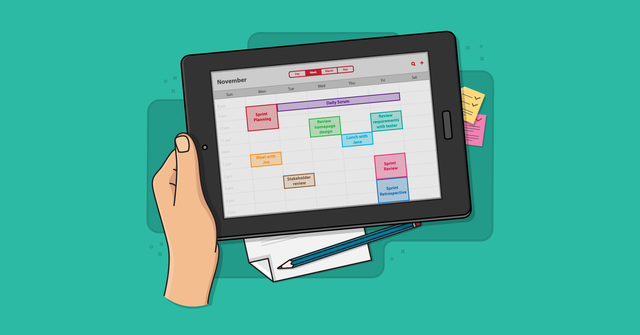
Does Scrum Have Too Many Meetings?
Are teams complaining about Scrum meetings? Learn why that happens, and how to fix it.

What Does Scrum Mean by Cross Functional Teams?
What exactly does cross functional mean and why does it matter?

Time Pressure Improves Productivity & Quality…Up to a Point
Use time pressure carefully so it improves focus without hurting quality.

7 Questions to Determine if Being a Scrum Master Is Right for You
Thinking of a career as a Scrum Master? 7 questions to help you decide if it's the right job for you.

8 Reasons Scrum Is Hard to Learn (but Worth It)
Transitioning to Scrum is worth it, but some aspects are challenging.

Three Rights of Effective Scrum Masters
To be effective, a Scrum Master has a right to expect at least three things from their company culture. Find out what those are.
The Chivalrous Team Member
Recognize helpful behavior that strengthens collaboration and trust.
What Does a Product Owner Do, When, and Why?
Clarify what product owners do before work starts, during planning, and throughout each sprint.

3 Ways to Ensure Agile Training Works to Transform Your Teams
The best agile training leads to real results. Learn how to ensure your investment pays off.
What Is a High-Performing Agile Team?
How to build and sustain a Scrum team that exceeds the sum of its parts.

3 Ways to Help Agile Teams Plan Despite Uncertainty
We might not like ambiguity, but it’s a fact of life. Find out how to plan with uncertainty in mind.

Should the Daily Scrum Be Person-by-Person or Story-by-Story?
Choose whether to discuss work person-by-person or story-by-story in daily scrum.

Agile Spikes Deliver Knowledge So Teams Can Deliver Products
Use spikes to reduce uncertainty and learn enough to move product work forward.

How Product Owners Can Evaluate Refactoring Work
Learn how product owners can evaluate refactoring when user-visible benefits are indirect.