

Agile and Waterfall are different ways of managing work when a team needs to build something, solve a problem, or deliver a product. Neither word should be treated as automatically good or bad. The useful question is which approach fits the work.
Waterfall and other phased approaches work best when the problem is well understood, the solution is predictable, and meaningful change is unlikely. Agile helps when the team needs feedback, learning, and adaptation during the work.
That distinction matters because many organizations use the wrong approach for the work in front of them. They use a predictive plan when the team still needs to learn too much. Or they use agile language while still working in a long, sequential way. In both cases, the label matters less than whether the way of working matches the uncertainty in the work.
Who This Page Is For
This page is for people who are new to agile or trying to understand why agile teams work differently from traditional project teams. It is especially useful if you have worked on Waterfall projects before, are joining an agile or Scrum team, or are trying to decide whether agile is appropriate for a particular project.
What This Page Covers
This page explains what people usually mean by Waterfall, how agile changes the timing of planning and feedback, when each approach can work, and why an “iterative Waterfall” often gives teams the cost of agile meetings without the benefit of real agility.
What Waterfall Means
Waterfall is the common name for a phased approach in which work moves through a sequence of stages. A team might gather requirements first, then analyze them, then design the solution, then build it, then test it, and finally release it.
Winston Royce’s 1970 paper is often cited in histories of Waterfall, although he did not use the term “waterfall.” In fact, Royce warned about the risk of a purely sequential approach in which testing and feedback happen late. That history is worth remembering because phased planning can be useful, but a phase-driven approach is risky when the work still requires learning.
That sequence can feel natural. It is appealing to believe that if the team does enough thinking up front, the rest of the work can proceed smoothly. For some kinds of work, that may be reasonable. If the team has solved the problem before, the technology is familiar, requirements are stable, and late feedback would not change much, a phased approach can work.
Waterfall becomes risky when those assumptions are not true. If users are likely to react differently than expected, if stakeholders will change their minds after seeing the product, if the technology includes unknowns, or if requirements are incomplete, a long sequential plan can create a false sense of certainty. The team may be busy for months before anyone learns whether the product is actually right.
What Agile Changes
Agile changes the timing of learning. Instead of trying to get all requirements, design, development, testing, and feedback to happen in separate stages, agile teams work in smaller pieces. They make enough of a plan to begin, build a small increment of useful work, get feedback, and use what they learn to decide what should happen next.
Agile teams still plan, and they plan often. They plan product direction, releases, sprints, backlog refinement, and day-to-day work. What changes is that agile teams expect the plan to improve as the team learns more.
This is one of the biggest differences between agile and Waterfall. Waterfall tries to make the early plan accurate enough to guide the whole effort. Agile uses early plans to start the right conversations, then updates those plans as the team learns from real work and real feedback.
The Role of Feedback
Waterfall tends to push the most useful feedback toward the end. Customers and stakeholders may not see a working product until after requirements have been documented, designs have been approved, and much of the product has been built.
That can be expensive. If the team learns near the end that users need something different, the organization has fewer options. It can accept a weaker product, spend more money, delay the release, or ask the team to make painful changes late in the project.
Agile reduces that risk by shortening the feedback loop. A team does not wait until everything is done to learn whether it is on the right track. It delivers smaller pieces of usable progress and invites feedback while there is still time to respond.
Feedback is valuable because it leads to better decisions. A shorter feedback loop helps the team discover misunderstandings, technical risks, usability problems, stakeholder disagreements, and better product ideas before those problems become expensive.
Defined and Empirical Work
Another way to compare agile and Waterfall is to ask whether the work is defined or empirical.
A defined process is one where the steps can be known in advance and repeated with the same result. If the work is predictable and repeatable, a phased plan may be enough. The team can define the work, follow the steps, and get the expected result.
Product development is often different. No one can write down every step for building the right product, hand those steps to ten teams, and expect each team to get the same result. The work usually includes uncertainty about users, technology, priorities, design, market timing, and what will actually create value.
That type of work needs an empirical approach. The team makes progress visible, inspects what is happening, and adapts based on what it learns. Agile approaches are built around that kind of work.
When Waterfall Can Work
Waterfall can work when the path is predictable. That usually means the team understands the problem well, the solution is known, the work can be decomposed reliably, and feedback is unlikely to change the direction.
For example, a team doing a routine implementation it has done many times before may not need the full set of agile feedback loops. A predictable infrastructure upgrade, a compliance update with clear requirements, or a repeatable operational project may be handled effectively with a phased plan.
Even then, teams should be honest about the uncertainty. Some projects appear predictable because people have not looked closely enough. If the team is making assumptions about users, technology, integration, or stakeholder agreement, the work may need more feedback than the initial plan suggests.
When Agile Helps More
Agile helps when learning during the work is essential. That often happens when the product is new, the solution is uncertain, stakeholders disagree about priorities, users may respond differently than expected, or the team needs to reduce the cost of discovering mistakes late.
Agile is also useful when the team needs to make progress while some details are still emerging. The team needs enough clarity to choose a valuable next step and enough feedback to keep improving the plan.
This is why agile is so common in software and product development. The team is rarely just executing a known set of steps. It is learning what users need, what solution will work, what technical risks exist, and which tradeoffs are worth making.
Agile Is Not No Planning
One of the most common misunderstandings is that agile means no planning.
That is wrong. Agile teams plan frequently, and good agile teams take planning seriously. They estimate, forecast, refine backlogs, discuss tradeoffs, plan sprints, and make decisions about scope and timing.
The difference is that agile teams treat a plan as a tool for making decisions, not as a contract that must be defended long after reality has changed. A useful plan helps the team decide what to do next. As the team learns more, the plan should become better.
Early planning is often useful. Trouble starts when the organization treats early planning as if it can remove uncertainty from work that still requires learning.
Agile Is Not Changing Anything Anytime
Agile welcomes change because change often reflects learning. A customer reacts to an early version. A stakeholder sees a simpler option. A technical risk becomes clearer. The team discovers that one feature matters less than expected and another matters more.
That does not mean every new idea should interrupt the team immediately. Agile teams still need focus. Scrum teams, for example, use Sprints partly to create a short period in which the team can focus on a goal.
A better way to say it is that agile makes change discussable. New information should lead to better decisions. Sometimes that means changing the plan right away. Sometimes it means adding an idea to the Product Backlog, waiting for the next planning conversation, or deciding that the current goal still matters most.
The Problem with Iterative Waterfall
Many teams say they are agile because they work in short cycles, but inside each cycle they still do the work sequentially. They spend the first part of the iteration on analysis, then design, then coding, then testing. At the end, they move unfinished work into the next cycle and repeat the pattern.
That is often iterative Waterfall. The team has shortened the calendar without changing the feedback loop very much. Testing still happens late. Feedback still comes late. Specialists still hand work to one another. The team still discovers problems after many decisions have already been made.
This can be frustrating because the organization gets more meetings and shorter deadlines without getting the benefit agile is supposed to provide. Real agility comes from finishing small pieces of useful work, getting feedback on them, and adapting. Merely compressing Waterfall phases into a two-week cycle is not enough.
How the Work Feels Different
On a Waterfall project, the team often feels pressure to get the early decisions right. Requirements documents, design approvals, and project plans carry a lot of weight because later stages depend on them. Change is possible, but it is often treated as disruption.
On an agile project, the team still wants good early thinking, but the pressure shifts. Instead of trying to make every early decision permanent, the team tries to learn quickly. It asks what can be delivered soon, what needs feedback, what risk should be tested early, and which decision can wait until the team knows more.
That can feel uncomfortable at first, especially for people used to detailed upfront plans. Agile can look less certain early on because it is more honest about uncertainty. Over time, the goal is for the team to create better predictability through frequent feedback, smaller increments, and more realistic planning.
A Simple Comparison
| Question | Waterfall | Agile |
|---|---|---|
| Best fit | Predictable work with stable requirements | Complex work where learning matters |
| Planning style | Larger upfront plan, often with sequential phases | Ongoing planning that improves as the team learns |
| Feedback timing | Often near the end or at major phase gates | Frequent feedback throughout the work |
| Change | Often treated as disruption | Treated as information to evaluate and use |
| Progress | Often measured by phase completion or task completion | Measured by useful increments of product or outcome progress |
| Risk | Many risks are discovered later | Teams try to expose important risks earlier |
| Requirements | Often specified in more detail up front | Progressively refined as understanding improves |
| Teamwork | Often organized by specialty handoffs | More cross-functional collaboration throughout the work |
Choosing Between Agile and Waterfall
The choice should start with the work, not with the label. Ask how much the team already knows and how much it still needs to learn.
If the path is predictable, the cost of late feedback is low, and the solution is well understood, a phased approach may be fine. Do not force agile practices where they add little value.
If the team needs feedback to know whether it is building the right thing, agile is usually a better fit. The more uncertainty there is about users, requirements, technology, priorities, or value, the more useful shorter feedback cycles become.
Some organizations will need both approaches in different parts of the business. The goal is to match the process to the uncertainty in the work rather than make every team work the same way.
Common Mistakes
Treating Waterfall as Always Bad
Waterfall is not automatically wrong. A phased approach can work well when the work is predictable and feedback is unlikely to change much. The mistake is using a predictive approach for work that requires learning.
Treating Agile as Always Better
Agile is not a magic word. Agile practices help when they create better feedback, collaboration, adaptation, and delivery of value. If the work is routine and predictable, agile may add little.
Calling Mini-Waterfalls Agile
Short iterations do not automatically make a team agile. If the team still does analysis, design, coding, and testing as separate mini-phases, it may be doing iterative Waterfall rather than working in an agile way. For more detail, see An Iterative Waterfall Isn’t Agile.
Using Agile to Avoid Discipline
Agile does not mean avoiding planning, documentation, architecture, testing, or commitments. Agile teams still need discipline. They just apply that discipline in smaller cycles and update their plans as they learn. For more detail, see Iterative vs. Incremental Development: Why Agile Teams Need Both.
Ignoring the Cost of Late Feedback
A plan can look efficient until the team learns late that the product is wrong. Agile helps reduce that risk by making feedback earlier and more frequent. For more detail, see Six Agile Product Development Myths - Busted.
Should This Work Be Agile?
Use these questions to decide whether agile is likely to help:
- Are requirements likely to change after people see early versions?
- Do users or stakeholders need to react to working product before the team knows enough?
- Are there important technical risks or unknowns?
- Would late feedback be expensive?
- Would smaller increments help the team make better decisions?
- Does the team need cross-functional collaboration rather than specialty handoffs?
- Would frequent inspection and adaptation improve the result?
If most answers are yes, agile is probably a good fit. If most answers are no and the work is predictable, a phased approach may be enough.
FAQ
Is agile better than waterfall?
Not always. Agile helps when learning and feedback are important. Waterfall or another phased approach can work when the work is predictable and change is unlikely.
Does agile mean no planning?
No. Agile teams plan frequently. They treat plans as useful tools that should improve as the team learns, rather than as fixed contracts.
Is waterfall always bad?
No. Waterfall can be reasonable when the work is well understood, the steps are predictable, and late feedback is unlikely to change the result much.
Why do agile teams work in small pieces?
Small pieces make feedback earlier and less expensive. They help teams discover misunderstandings, risks, and better options before too much has been built.
What is iterative waterfall?
Iterative Waterfall happens when a team works in short cycles but still does analysis, design, coding, and testing as separate mini-phases. The team may have iterations, but it is not getting the full benefit of agile feedback loops.
Can agile and waterfall coexist?
Yes, especially in larger organizations. But the handoffs and expectations between agile and sequential teams need attention. The more the agile team depends on late handoffs or phase-gate decisions, the more difficult agility becomes.
How do I know which approach to use?
Look at uncertainty. If the team can predict the work reliably and feedback will not change much, a phased approach may work. If the team needs feedback to know what to build, agile is usually a better fit.
Writing the Product Backlog Just in Time and Just Enough
FeaturedKeep backlog detail just enough and just in time.

Early Scrum as Waterfall, But...
FeaturedExplore Early Scrum as Waterfall, But in this Mountain Goat Software video.
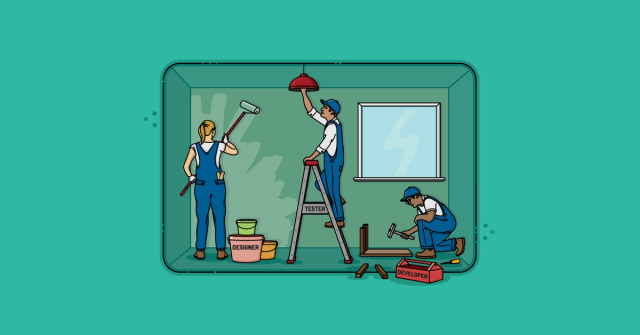
An Iterative Waterfall Isn’t Agile
FeaturedSpot when sprints are masking a waterfall process and how to move toward real agility.
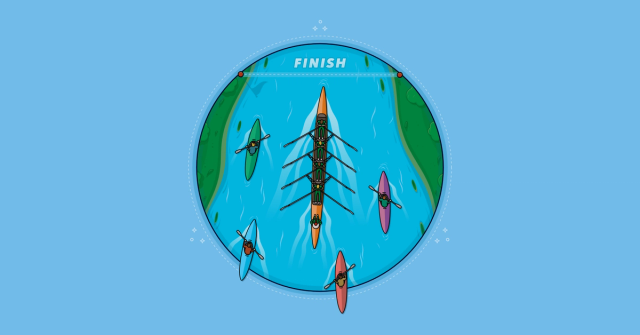
Why Your Scrum Team Still Works Like Individuals
Learn how handoffs, individual task ownership, and status-report daily scrums keep Scrum teams from collaborating—and what to change next sprint.
Multiple Levels of Done
Define done at more than one level so expectations stay clear from story to release.
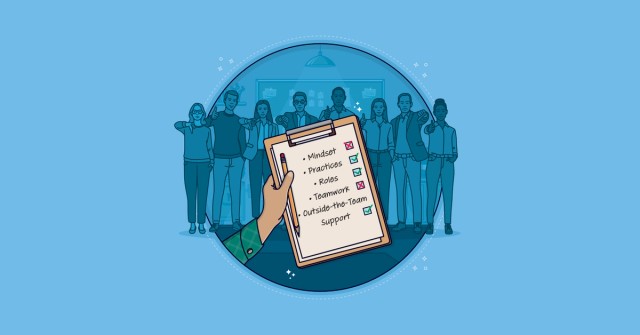
We Tried Agile and It Didn’t Work
“We tried agile and it didn’t work” is one of the most revealing things a leader can hear.
8 Reasons Scrum Is Hard to Learn (but Worth It)
Transitioning to Scrum is worth it, but some aspects are challenging.
7 Advantages of Scrum (Plus 1 Hidden Disadvantage)
Scrum benefits teams and orgs in many ways. But there’s a downside some enterprises overlook.
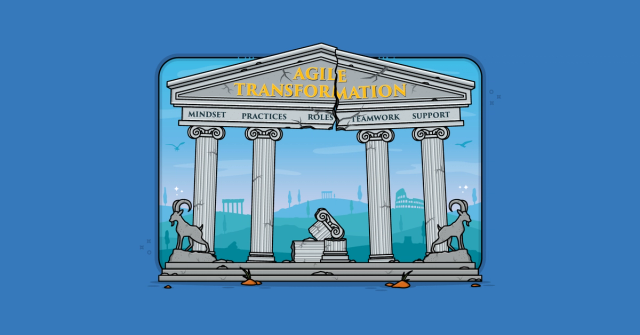
The Five Pillars of a Successful Agile Transformation
Discover the secret to a successful agile transformation and learn what to try if your organization is struggling.
Do the Proven Benefits of Agile Training Justify the Costs?
Need to know if agile training will pay off? Start with an estimate of the expected benefits.
Agile Teamwork
Learn how agile teams share responsibility, reduce handoffs, and finish valuable work together.
Does Scrum Have Too Many Meetings?
Are teams complaining about Scrum meetings? Learn why that happens, and how to fix it.