

A healthy product backlog helps a Scrum team decide what to do next.
It gives the Product Owner a useful way to make tradeoffs, gives the team enough visibility into upcoming work, and helps stakeholders understand what is likely, what is uncertain, and what is no longer worth keeping.
An unhealthy backlog becomes too large to manage, too vague to support Sprint Planning, or too detailed in places where detail is not yet useful. It can hide old decisions, stale requests, duplicate ideas, and maybe-someday work behind the appearance of preparedness.
Who This Page Is For
This page is for Product Owners, Scrum Masters, agile coaches, Developers, and leaders who want a product backlog that helps the team make better decisions.
It is especially useful for teams whose backlog has become too long, stale, vague, over-detailed, or hard to use in Sprint Planning.
What This Page Covers
You will learn what backlog health means, why a healthy backlog has a clarity gradient, how to use DEEP as a simple health model, how to keep the backlog small enough to be useful, and how refinement helps the backlog stay healthy over time.
What Is a Healthy Product Backlog?
A healthy product backlog is an ordered, evolving list of possible future work that helps the Product Owner and team make good decisions.
It helps answer questions such as:
- What should we consider next?
- What is most valuable now?
- Which items are clear enough to refine or discuss in Sprint Planning?
- Which items are too large, vague, risky, or poorly understood?
- Which old items should be removed?
- What have we learned that should change the backlog?
When a backlog is healthy, it supports conversations. When it is unhealthy, it creates noise.
Maintain a Clarity Gradient
A healthy backlog is not equally detailed from top to bottom.
Items near the top should be smaller, clearer, and better understood because the team may work on them soon. Items farther down can be larger, less detailed, and more flexible because they may change, split, merge, or disappear before the team ever works on them.
That is the clarity gradient.
If everything near the top is vague, Sprint Planning becomes a rescue mission. If everything in the backlog is highly detailed, the team is probably spending time on work that may never be built.
The goal is appropriate detail.
Think of the Backlog Like an Iceberg
A useful metaphor is the product backlog iceberg.
At the top are high-priority items the team may work on soon. These should be small enough and clear enough to complete within a sprint. As you move lower in the backlog, items can become larger and less detailed. Some may be understood only well enough to estimate roughly or discuss as future possibilities.
This is a practical response to change.
The team does not need full visibility all the way to the horizon. It needs enough visibility to move responsibly at its current speed. When lower-priority work rises toward the top, the Product Owner and team add detail, split oversized items, answer important questions, and decide whether the item is still worth doing.
Use DEEP as a Simple Health Model
DEEP is a useful way to remember the qualities of a healthy product backlog.
A healthy backlog is:
- Detailed appropriately: Near-term items are clearer and smaller. Farther-out items can remain larger and less detailed.
- Estimated: Items have enough size information to support planning, forecasting, and tradeoff decisions.
- Emergent: The backlog changes as the Product Owner, team, stakeholders, and customers learn.
- Prioritized: Or, in Scrum terms, ordered. The most important work rises toward the top.
DEEP does not mean every item is fully described, precisely estimated, and locked into place. It means the backlog contains enough information for the decisions being made now.
Keep the Backlog Small Enough to Use
A long backlog can look reassuring. It can also hide indecision.
When the backlog is too large, it becomes harder to find items, harder to prioritize, and easier to create duplicates. The team may also lose any sense of progress. Completing 10 items out of 50 feels different from completing 10 items out of 1,000.
A healthy backlog is not necessarily tiny, but it should be manageable.
One of the Product Owner’s most important backlog health responsibilities is removing work, not just adding it. That may mean deleting items that will never be done, archiving old ideas, moving uncertain possibilities into a separate idea list, or saying no instead of adding another item just in case.
Prune Regularly
Backlogs become unhealthy gradually.
A duplicate request is added. A stale bug stays around. A feature idea remains long after the strategy changes. A maybe-someday item survives because no one wants to delete it. Over time, the backlog becomes heavy.
Regular pruning keeps that from happening.
A Product Owner might review the backlog quarterly and ask:
- Is this still worth considering?
- Do we still understand why this item exists?
- Is it a duplicate of something else?
- Has the product goal changed enough that this no longer matters?
- Should this be deleted, archived, split, clarified, or moved lower?
Deleting a backlog item can be evidence that the Product Owner is making real tradeoffs.
Keep Not-Ready Ideas Somewhere Else
Some ideas are worth keeping but are not ready to be product backlog items.
A separate idea list can help. Use it for ideas the Product Owner may want later but is not ready to discuss with the team now. These might be requests that need more thought, ideas that may not survive strategy changes, or possibilities that are not yet connected to a near-term goal.
The product backlog should contain work the Product Owner can discuss and make decisions about. A separate idea list protects the backlog from clutter without losing potentially useful ideas.
Refine to Maintain Backlog Health
Product backlog refinement keeps the top of the backlog usable.
As items move toward the top, they need more attention. The team and Product Owner clarify intent, split large items, identify important risks, add or revise acceptance criteria, estimate or re-estimate, and remove items that no longer matter.
The goal is confidence, not certainty.
A backlog item is refined enough when the team understands it well enough to believe it can fit in a sprint. That does not require every edge case or design decision to be settled. It means the sprint-threatening uncertainty has been addressed.
Too little refinement creates chaos. Too much refinement creates waste. A healthy backlog balances the two.
Watch the Symptoms of an Unhealthy Backlog
Backlog problems often show up somewhere else.
Sprint Planning takes too long. Stories turn out to be larger than expected. Work carries over repeatedly. The team has to split items during Sprint Planning. Stakeholders are surprised by what is or is not being worked on. Old items remain in the backlog even though no one can explain why they matter.
These symptoms point to useful improvement opportunities:
- The top of the backlog is too vague for Sprint Planning
- Items near the top are too large to finish in a sprint
- Everything in the backlog is equally detailed
- The backlog contains stale, duplicate, or low-value items
- The Product Owner avoids deleting items
- Refinement focuses on far-future work while near-term work remains unclear
- The team regularly discovers major surprises after a sprint starts
- Stakeholders treat the backlog as a request queue instead of a decision-making tool
Common Product Backlog Health Mistakes
Confusing a Long Backlog with a Healthy Backlog
A backlog full of stale, vague, duplicate, or low-value items does not help anyone decide what to do next. It creates noise. For more detail, see How the Story Critic AI Skill Helps Teams Write Better Backlog Items.
Over-Refining Far-Future Work
Teams sometimes add detail to items that may never be built. Add detail progressively as items become more likely to matter.
Under-Refining Near-Term Work
If upcoming items are not small enough or clear enough, Sprint Planning has to do refinement’s job.
Keeping Everything Just in Case
Just-in-case thinking turns backlogs into warehouses. Some ideas should be deleted, archived, or kept outside the product backlog until they are worth discussing. For more detail, see Writing the Product Backlog Just in Time and Just Enough.
Treating the Backlog as a Stakeholder Request Queue
A product backlog should help the Product Owner make tradeoffs. If every stakeholder request is automatically added, the backlog stops representing product decisions. For more detail, see Make the Product Backlog DEEP.
Letting the Backlog Become Stale
A backlog should change as the team learns. If old items never move, split, disappear, or change priority, the backlog may be preserving outdated thinking. For more detail, see How the Story Critic AI Skill Helps Teams Write Better Backlog Items.
Is Your Product Backlog Healthy?
Use these questions to find the next backlog health conversation the Product Owner and team may need to have.
- Are the top items clear enough to discuss in Sprint Planning?
- Are upcoming items small enough that the team can reasonably believe they will fit in a sprint?
- Are lower-priority items allowed to remain larger and less detailed?
- Does the backlog have a visible clarity gradient?
- Are stale, duplicate, or low-value items removed regularly?
- Is the backlog small enough to be useful?
- Are far-future ideas kept lightweight or moved to a separate idea list?
- Does refinement create confidence without trying to eliminate every unknown?
- Does the backlog change when the team learns something important?
FAQ
What makes a product backlog healthy?
A healthy product backlog is ordered, appropriately detailed, estimated enough to support planning, and able to change as the team learns.
How detailed should a product backlog be?
Detailed enough for the decisions being made now. Items near the top should be clearer and smaller because the team may work on them soon. Items farther down can remain larger and less detailed.
How long should a product backlog be?
There is no universal right length. A backlog should be long enough to support useful planning and tradeoff conversations, but short enough that the Product Owner and team can actually use it.
Should we delete product backlog items?
Yes. If an item is no longer valuable, no longer aligned with the product goal, duplicated elsewhere, or realistically never going to be done, deleting or archiving it can make the backlog healthier.
What is a clarity gradient?
A clarity gradient means items near the top of the backlog are clearer and smaller than items farther down.
What does DEEP mean for a product backlog?
DEEP means detailed appropriately, estimated, emergent, and prioritized.
How does backlog health affect sprint planning?
Healthy backlogs make Sprint Planning easier. When top items are small, clear, and understood well enough, the team can spend Sprint Planning deciding what to do and how to approach it.
AI Changes What Makes a Product Backlog Valuable
FeaturedAI makes detailed backlog items and working software easier to produce. Learn why that favors more dynamic backlogs and makes early validation more important.

Story Critic
FeaturedStory Critic is a free AI coach for improving backlog items without turning them into miniature specifications. It helps developers, testers, analysts, designers, and product owners make user stories, job stories,…

Writing the Product Backlog Just in Time and Just Enough
FeaturedKeep backlog detail just enough and just in time.

Why Your Product Backlog Should Look Like an Iceberg
FeaturedShape the backlog so near-term items are detailed and lower-priority work stays lighter.
AI Can Write Backlog Items. It Can’t Create Shared Understanding
AI can generate polished user stories and acceptance criteria in seconds. Learn how to use it without skipping product judgment, user evidence, or team conversations.
How the Story Critic AI Skill Helps Teams Write Better Backlog Items
See how AI coaching can help teams write clearer, smaller, more testable backlog items.
What Happens When During a Sprint
Succeeding with Scrum is easier when you know when and why to conduct each of the Scrum events during the sprint.
Make the Product Backlog DEEP
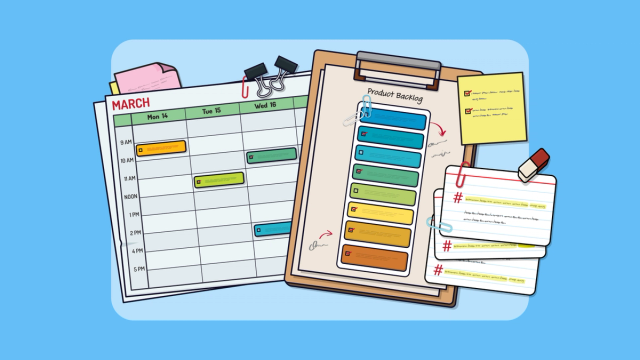
A DEEP product backlog is detailed appropriately, estimated, emergent and prioritized.

Backlogs
Learn how to shape, prioritize, refine, and size product and sprint backlogs so teams can focus on valuable work that is ready at the right time.
What Are Agile Story Points?
Understand what story points measure and why they are often misunderstood.
Product Backlog Refinement
Learn about product backlog refinement: how, when, and why the agile team and product owner refine the product backlog in Scrum.

Four Reasons Agile Teams Estimate Product Backlog Items
Estimating product backlog items provides benefits beyond predicting when a project will be finished.

3 Ways to Help Agile Teams Plan Despite Uncertainty
We might not like ambiguity, but it’s a fact of life. Find out how to plan with uncertainty in mind.
When Should We Estimate the Product Backlog
Estimate backlog items at the right time and level of detail.
What Does a Product Owner Do, When, and Why?
Clarify what product owners do before work starts, during planning, and throughout each sprint.
The Sprint Goal: What It Is and How It Can Help
Sprint goals are something every Scrum team should try to create. Learn what sprint goals are and what a good sprint goal looks like.

Why Agile Teams Should Estimate at Two Different Levels
It’s important for most agile teams to estimate both their product and sprint backlogs. But why?

What Product Owners Do & 7 Mistakes to Avoid
Use seven common product owner mistakes to spot where ownership, prioritization, or collaboration may be breaking down.

Should You Become a Product Owner?
Explore the skills, paths, and tradeoffs to consider before stepping into the product owner role.
Who Can Add Items to the Product Backlog?
Clarify who can add backlog items and how product owners keep control.

Why Your Scrum Team Still Works Like Individuals
Learn how handoffs, individual task ownership, and status-report daily scrums keep Scrum teams from collaborating—and what to change next sprint.

Backlog Refinement Workshop
Improve refinement using real backlog items so planning is clearer and faster.

Backlog Story Improvement
Improve backlog quality, story splitting, refinement, and the flow of work from idea to delivery.

Mastering User Stories
A one-day course where your team improves real backlog items while learning how to write, split, and refine better stories.

Story Writing Workshop
Improve real backlog items in a facilitated workshop so teams can practice user stories with work they actually need to deliver.