

A good user story helps the team make better decisions and move work toward delivery.
It does not need perfect wording. It does need a useful outcome, a manageable size, enough clarity for the next decision, and room for the team to talk through options.
A Good Story Creates Shared Understanding
The best quick test for a user story is simple: does the team have enough shared understanding to work on it well?
That understanding comes from the written story, the conversations around it, and the confirmation details that explain what must be true when the work is complete. The written sentence alone is rarely enough.
A story should help the team answer questions such as:
- Who benefits from this work?
- What outcome or capability does that person need?
- Why does this matter now?
- What is intentionally out of scope?
- What must be true for the item to be considered complete?
Those questions are more useful than policing template wording.
Use INVEST as a Diagnostic
INVEST is a helpful memory aid for six qualities often found in good stories:
- Independent
- Negotiable
- Valuable
- Estimable
- Small, or sized appropriately
- Testable
Treat INVEST as a diagnostic, not a scoring system. A story does not fail because it is imperfect on one dimension. INVEST helps the team find the next conversation.
If a story is not independent, talk about dependencies. If it is not valuable, ask who cares and why. If it is not testable, clarify the examples, rules, or acceptance criteria.
Independent Enough to Plan
Dependencies make stories harder to prioritize, plan, and finish.
A story does not need to be perfectly independent. Real products have dependencies. But the team should understand important dependencies and reduce them when they create planning or delivery problems.
Sometimes the answer is to split differently. Sometimes it is to change the order of stories. Sometimes it is to coordinate across teams. And sometimes the dependency is acceptable because the benefit is worth it.
The goal is not dependency purity. The goal is fewer surprises and more options.
Negotiable Enough to Invite Better Ideas
A good story leaves room for conversation.
If the story dictates every screen, field, table, exception, and design choice before the team has discussed the problem, the team may miss better options.
Negotiable does not mean vague forever. It means the story is open to discussion until the team and product owner agree on the details that matter.
There will be constraints. There may be brand rules, compliance requirements, architectural limits, or stakeholder commitments. Put those constraints where the team can see them. Do not bury the user goal under implementation detail unless the implementation is truly the point.
Valuable to Someone
Someone should care whether the story is completed.
That someone might be a customer, end user, support agent, business stakeholder, operations team, compliance group, product manager, or the product itself. Value can include revenue, usability, risk reduction, learning, reliability, compliance, or future capability.
What matters is that the value is visible enough to guide decisions.
Weak:
As a user, I want reports so that I can see data.
Stronger:
As a regional sales manager, I need to compare monthly revenue by territory so that I can identify where coaching or support is needed.
The second story helps the team understand the decision behind the feature. That makes design and scope conversations more useful.
Estimable Enough to Discuss
A story is estimable when the team understands it well enough to have a reasonable sizing conversation.
If the estimate varies wildly because people are imagining different products, the story needs more conversation. If the estimate varies because there is genuine technical uncertainty, the team may need a spike, a prototype, or a smaller story that reduces the risk.
Estimable does not mean predictable to the hour. It means the story is clear enough for the team to make a planning decision.
Small Enough to Finish
A story that cannot be finished in a sprint is usually too large.
Large stories create the feeling of progress without the evidence of progress. The backend is done, the UI is almost done, the tests are pending, and the team has learned a lot--but no one is comfortable calling the story complete.
Good stories are small enough that the team can finish them and get feedback.
Small does not mean trivial. It means the story can move all the way through design, development, testing, review, and acceptance in a reasonable amount of time.
When a story is too large, avoid splitting by technical layer. Look instead for a smaller path through the functionality, a simpler rule, one data source, one user role, one workflow, or one meaningful scenario.
Testable Enough to Confirm
Before a story is brought into a sprint, the team should understand what must be true for the item to be considered complete.
That does not require a long list of test cases. It may require examples, acceptance criteria, business rules, sketches, or a conversation with the product owner.
A testable story lets the team and product owner agree on completion. Without that agreement, the team may build something technically correct that still disappoints the person who requested it.
Common Problems with User Stories
The Story Is Too Large
Look for a smaller scenario that still matters. Avoid splitting into database, API, UI, and testing work unless those are tasks under a user-facing story. For more detail, see How Detailed Should a User Story Be?.
The Story Is Too Vague
Add examples. Ask what decision the user is trying to make. Identify the most important rules. Clarify what would cause the product owner to reject the story. For more detail, see How Detailed Should a User Story Be?.
The Story Is Too Detailed
Move premature detail out of the story body. Keep the intent visible. Add detail closer to implementation when it supports a real decision. For more detail, see How Detailed Should a User Story Be?.
The Story Is Really a Task
A task describes work the team performs. A story describes an outcome someone wants or needs. If the backlog item only says "create a table" or "write tests," decide whether it belongs as a task under a story or as a technical backlog item. For more detail, see How the Story Critic AI Skill Helps Teams Write Better Backlog Items.
FAQ
Does every good story need to be independent?
No. Independence is useful because it gives the product owner more ordering options and gives the team more flexibility. Some dependencies are unavoidable. The team should make them visible and reduce the ones that hurt delivery.
Can a technical story be a good story?
Sometimes. If the technical work has a clear beneficiary, outcome, and confirmation, story language may help. Other times, technical backlog item, spike, chore, or task is clearer.
Should we use a definition of ready?
Be careful. A lightweight readiness conversation can help. A rigid checklist can become a barrier that delays learning or encourages teams to over-document stories too early.
What is the most important quality of a good user story?
Usefulness. A story is good when it helps the team understand, discuss, split, refine, implement, and confirm the work.
A Story Health Checklist
Use this checklist during refinement or before sprint planning to find the next useful conversation.
- The team understands who benefits from the story.
- The team understands why the story matters now.
- The story is small enough that the team believes it can finish it in a sprint.
- The team has avoided splitting only by technical layer.
- The story leaves room for discussion about the solution.
- The team understands what must be true for the item to be considered complete.
- Important dependencies are visible.
- Important risks have been discussed or turned into a spike.
A story does not need to be perfect on every dimension. It needs to be good enough for the decision being made. For a story far down the backlog, that may mean the product owner remembers an important idea. For a story entering a sprint, that means the team has enough shared understanding to finish the work.
How Good Stories Improve Planning
Good stories make sprint planning calmer.
When stories are too large, sprint planning becomes negotiation. The team tries to guess how much unfinished work will fit, then spends the sprint discovering the missing details. When stories are too vague, the team estimates different versions of the same idea. When stories are too prescriptive, the team loses the chance to find simpler or better solutions.
Good stories do not eliminate uncertainty. They make the uncertainty visible early enough to discuss.
A team with good stories can spend sprint planning talking about goals, capacity, tradeoffs, and delivery strategy. A team with weak stories spends sprint planning doing emergency refinement.
How the Story Critic AI Skill Helps Teams Write Better Backlog Items
FeaturedSee how AI coaching can help teams write clearer, smaller, more testable backlog items.

Story Critic
FeaturedStory Critic is a free AI coach for improving backlog items without turning them into miniature specifications. It helps developers, testers, analysts, designers, and product owners make user stories, job stories,…
Writing the Product Backlog Just in Time and Just Enough
FeaturedKeep backlog detail just enough and just in time.

AI Can Write Backlog Items. It Can’t Create Shared Understanding
FeaturedAI can generate polished user stories and acceptance criteria in seconds. Learn how to use it without skipping product judgment, user evidence, or team conversations.
How Detailed Should a User Story Be?
Capturing too much or too little detail in a user story causes problems. Here's how to get it right, iteratively.
What Are Agile Story Points?
Understand what story points measure and why they are often misunderstood.

Why Agile Teams Should Estimate at Two Different Levels
It’s important for most agile teams to estimate both their product and sprint backlogs. But why?
How to Use AI for Product Discovery and Writing Better User Stories
Use AI to support product discovery, user interviews, and writing better user stories.

When Should We Estimate the Product Backlog
Estimate backlog items at the right time and level of detail.
The Sprint Goal: What It Is and How It Can Help
Sprint goals are something every Scrum team should try to create. Learn what sprint goals are and what a good sprint goal looks like.
Product Backlog Refinement
Learn about product backlog refinement: how, when, and why the agile team and product owner refine the product backlog in Scrum.
Should You Re-Estimate Unfinished Stories?
We avoid having unfinished work at the end of a sprint, but it sometimes happens. Here’s what to do.

Four Reasons Agile Teams Estimate Product Backlog Items
Estimating product backlog items provides benefits beyond predicting when a project will be finished.

Mastering User Stories
A one-day course where your team improves real backlog items while learning how to write, split, and refine better stories.
The Two Ways to Add Detail to User Stories
User stories can be deliberately vague at first but detail needs to be added eventually. There are two ways to do that.

Should the Daily Scrum Be Person-by-Person or Story-by-Story?
Choose whether to discuss work person-by-person or story-by-story in daily scrum.
When Planning Should Become A Shared Problem
Turn planning pressure into a shared conversation about options and tradeoffs.
Multiple Levels of Done
Define done at more than one level so expectations stay clear from story to release.

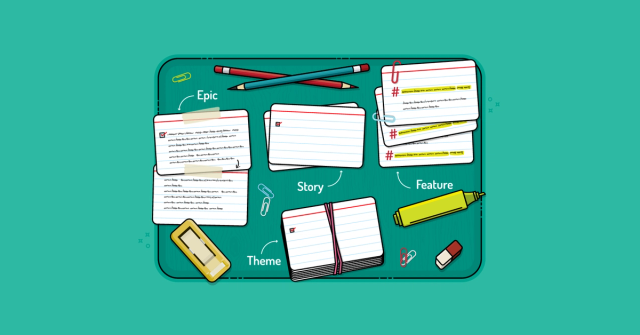
Epics, Features and User Stories
Clarify the difference between epics, features, and user stories without getting stuck on labels.
Agile Spikes Deliver Knowledge So Teams Can Deliver Products
Use spikes to reduce uncertainty and learn enough to move product work forward.

How Product Owners Can Evaluate Refactoring Work
Learn how product owners can evaluate refactoring when user-visible benefits are indirect.

Story Writing Workshop
Improve real backlog items in a facilitated workshop so teams can practice user stories with work they actually need to deliver.

Backlog Story Improvement
Improve backlog quality, story splitting, refinement, and the flow of work from idea to delivery.

Backlog Refinement Workshop
Improve refinement using real backlog items so planning is clearer and faster.