

People are sometimes when I recommend that programmers participate in story-writing workshops. After all, a story-writing workshop is a meeting targeted at determining the functionality to be built next. I like to do story-writing workshops about quarterly to focus on bigger initiatives. But some projects will do story writing every sprint.
Regardless of how often these meetings occur, I think it's vital that programmers, testers, database engineers, and so on participate. Collectively I refer to individuals in any of these roles as developers, and I think there are four critical reasons to include developers in story-writing meetings.
Reason 1: Increased Engagement
The first reason I like to include developers is that doing so increases the engagement of developers. You want your developers excited about, bought into, and engaged with the product being built. A team with developers who come to work with no passion or interest in what they’re developing will not perform at its highest level.
Involving developers in story writing allows them an opportunity to contribute to discussions about what is being built. It’s unlikely their ideas will be as good as those of the product owner or most others with a deeper understanding of the business and its customers, but still important enough to be heard.
Reason 2: Increased Learning
How did the business people get that deeper understanding of the business and its customers? By spending time thinking about the product, the business or its customers.
Bringing developers into story writing workshops gives them that opportunity. And this is our second reason for including developers: The more they are involved, the more they’ll learn. Over time, you may just find that some of the best ideas *are* coming from the developers.
Reason 3: It Doesn’t Cost as Much Time as You Think
A common objection to involving developers is that they don’t have the time to spend in yet another meeting. Fortunately, some of the time spent in the actual meeting is saved in coming sprints because the developers will have fewer questions.
When the developers are there when ideas are generated, they will have fewer questions about why customers want something, if there are other ways to satisfy that need, and so on.
There is a time cost to having developers in these meetings, but it’s not as great as you might think. And the other advantages outlined here more than make up for the investment.
Reason 4: It Leads to Increased Creativity
A final reason for including developers in story writing is the increased creativity it will lead to. With more people thinking about ways to make your product the best it can be, the product owner will have more ideas to choose from when prioritizing.
I find this especially true because developers often have such different ways of thinking about a problem than the business people do. Neither one is superior. It’s the diversity of backgrounds, skills, and ways of thinking about a problem that creates the best solution for a product’s users.
Make Story Writing a Team Conversation
A story-writing workshop should not be limited to the product owner and a few business stakeholders. Developers bring useful questions, technical insight, and a different way of thinking about the product.
They do not need to make every product decision. But when they are included early, they understand the work better, contribute better ideas, and need less explanation later.
That makes story writing more than a way to create backlog items. It becomes one of the ways a team builds shared understanding before the work begins.

AI Can Write Backlog Items. It Can’t Create Shared Understanding
FeaturedAI can generate polished user stories and acceptance criteria in seconds. Learn how to use it without skipping product judgment, user evidence, or team conversations.
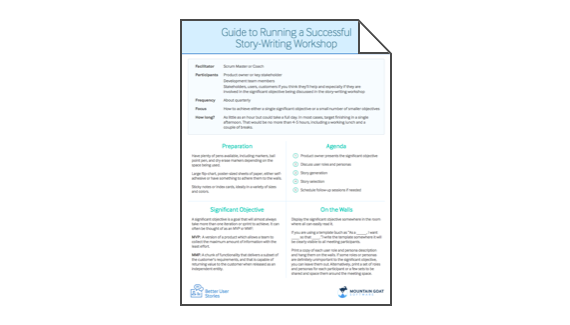
Story-Writing Workshop Guide
FeaturedPlan and facilitate a collaborative story-writing workshop that involves developers and produces stronger backlog items. A story-writing workshop is one of the best ways to involve developers in story writing.

Story Writing Workshop
FeaturedImprove real backlog items in a facilitated workshop so teams can practice user stories with work they actually need to deliver.

Writing User Stories
FeaturedA user story should help a team have the right conversation. The words matter, but only because they point the team toward the user, the goal, and the reason the work matters.

Writing the Product Backlog Just in Time and Just Enough
Keep backlog detail just enough and just in time.

Product Backlog
A product backlog is a prioritized list of possible future work for a product. It helps the Product Owner and team decide what to build, fix, learn, or improve next.

How Detailed Should a User Story Be?
Capturing too much or too little detail in a user story causes problems. Here's how to get it right, iteratively.

User Stories
Learn how to write, refine, split, and map user stories that help agile teams understand customer needs and deliver valuable outcomes.

What Does a Product Owner Do, When, and Why?
Clarify what product owners do before work starts, during planning, and throughout each sprint.

Story Critic
Story Critic is a free AI coach for improving backlog items without turning them into miniature specifications. It helps developers, testers, analysts, designers, and product owners make user stories, job stories,…

Mastering User Stories
A one-day course where your team improves real backlog items while learning how to write, split, and refine better stories.

Short Answers to Your Big Questions about User Stories
Get quick answers to common questions about user stories and acceptance criteria.
Be a Great Product Owner: Six Things Teams and Scrum Masters Need
See what teams and Scrum Masters need most from a product owner to make delivery smoother.
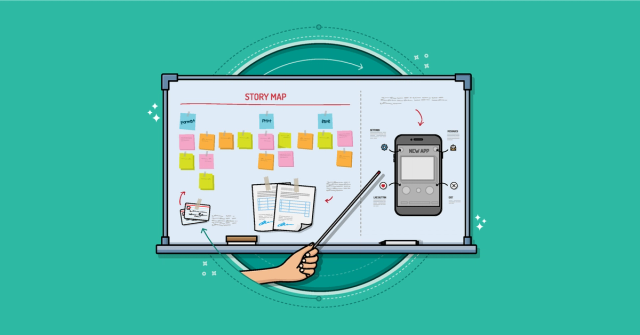
User Stories: How to Create Story Maps
Story maps help to create a shared understanding of the product, visualize user needs, and elicit user story ideas. Discover how to create your own.

Don’t Equate Story Points to Hours
Story points are about time, specifically effort. But that does not mean you should say, “One story point = eight hours.

Job Stories Offer a Viable Alternative to User Stories
As useful as user stories can be, they’ve never been right for every team. An exciting alternative for some teams is the job story.

The Sprint Goal: What It Is and How It Can Help
Sprint goals are something every Scrum team should try to create. Learn what sprint goals are and what a good sprint goal looks like.

Advantages of User Stories over Requirements and Use Cases
Compare user stories with requirements and use cases to see where stories help agile teams.

User Story Template: What It Is and Why It Works So Well
Understand why the three-part user story template works and where it falls short.

Backlog Refinement Workshop
Improve refinement using real backlog items so planning is clearer and faster.

Backlog Story Improvement
Improve backlog quality, story splitting, refinement, and the flow of work from idea to delivery.