
By 2026, most agile practitioners have plenty of scar tissue when it comes to estimating and planning.
I hear the same stories again and again. Estimates treated as promises. Plans turned into contracts. Teams punished for being wrong rather than rewarded for learning. Given experiences like those, it’s understandable that many teams conclude the solution is to eliminate estimating and planning altogether.
I think that’s a mistake.
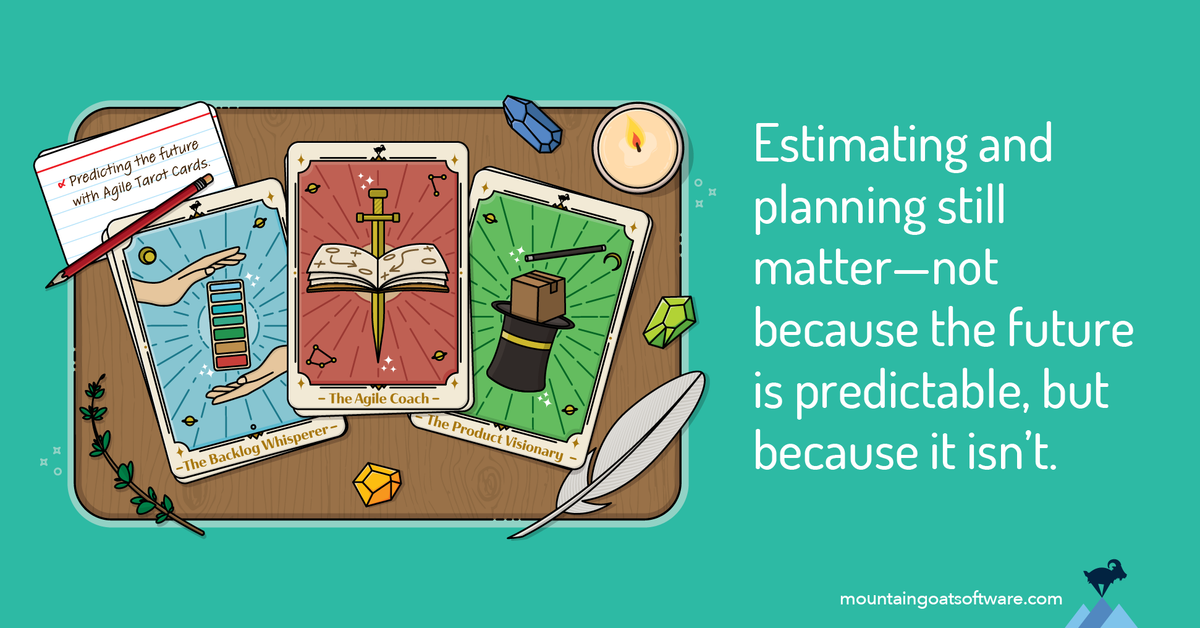
Estimating and planning still matter—not because the future is predictable, but because it isn’t. They matter because teams and organizations still have to make decisions about what to work on, what to defer, and what risks they’re willing to accept.
In this post, I’ll explain why I believe that, and what estimating and planning look like when they’re used responsibly by modern agile teams.
You Can’t Avoid Estimating—Only Hide It
Any time you choose one piece of work over another, you’re estimating.
You’re estimating cost, value, risk, or effort—even if you never put a number on it. Over the years, I’ve worked with teams who proudly claimed they “don’t estimate,” only to watch them make decisions based on unspoken assumptions about size and difficulty.
The estimates were still there; they were just invisible and unexamined.
The real choice isn’t whether to estimate. It’s whether estimates are explicit or implicit, discussed or denied. In my experience, explicit estimates create transparency, while implicit estimates create the illusion that no one is guessing.
(For a deeper look at why teams struggle with this, see my earlier post on why we think we’re bad at estimating.)
Estimates Are for Decisions, Not Predictions
One of the most damaging beliefs in agile is that estimates exist to be accurate.
That framing turns every estimate into a test—and every miss into a failure. It also explains why estimating generates so much anxiety.
In healthy agile environments, estimates exist to support decisions. They help answer questions like: Is this initiative worth starting? Should we do this now or later? What are we trading off if we choose this?
A much better question than “Is this estimate accurate?” is this:
Is this estimate good enough to support the decision we’re making?
I’ve written more about tying estimates to decisions in posts like How Can We Get the Best Estimates of Story Size?. When teams ask the right question, estimation becomes far less contentious—and far more useful.
Wrong Estimates Are Not Failures
I often hear people say, “Estimates are always wrong.” They’re usually saying this with some frustration—and they’re not entirely wrong.
But being wrong isn’t the real problem.
Estimates are hypotheses. Reality supplies the data.
I’m reminded of this every time I run a training class. If it's a class I've taught before I can estimate almost perfectly how long it will take to set up exercises in our Team Home software, how long it will take to prepare the slides, and how long it will take to review my presenter notes.
When it's a new class, though, all bets are off. When my estimate is off, it doesn’t mean estimating was pointless. It tells me exactly what I didn’t yet know.
That’s how estimation works on agile teams as well. When an estimate misses, teams can discover hidden complexity, surface faulty assumptions, and build shared understanding.
The failure isn’t being wrong. The failure is treating estimates as promises—and punishing teams when reality turns out to be more complex than anyone anticipated.
Planning Does Not Reduce Adaptability
Planning is often portrayed as the opposite of agility. In practice, the opposite is true.
Good planning aligns assumptions and intent. It gives teams a shared starting point so they can adjust quickly when things change.
What actually reduces adaptability is planning too far into the future, over-committing to uncertain work, and treating plans as contracts instead of guides.
I like to think of planning the way I think about planning a hike. You don’t plan because you expect the weather to behave. You plan so you know how to respond when it doesn’t.
Flow Metrics and Estimation Work Best Together
Flow metrics have added valuable empirical grounding to agile work. They help teams understand how work has flowed in the past.
But flow metrics struggle with novelty. Whenever work is new, risky, or meaningfully different from what a team has done before, historical averages become less reliable.
That’s where estimation still helps—not to predict precisely, but to reason about what might be different this time.
Rather than choosing sides, I encourage teams to use both. Flow metrics ground conversations in data. Estimation for thinking through new work.
Planning Is a Human‑Centered Practice
One of the surprises I’ve seen over the years is that removing planning often increases pressure on teams rather than relieving it.
Without clear boundaries, work expands. Priorities shift constantly. Over‑commitment becomes invisible. Teams feel like they’re always behind, even when they’re doing good work.
Lightweight planning creates focus and boundaries. It gives teams a chance at sustainable pace.
Planning isn’t bureaucracy. It’s one of the ways teams protect themselves from chaos.
When Estimation Becomes Harmful
Estimation has gone wrong when numbers are used to evaluate individuals, when variance is punished rather than examined, and when precision is demanded where uncertainty is high.
Those are not failures of estimation techniques. They are failures of leadership intent.
When leaders use estimates to learn, teams behave one way. When leaders use estimates to blame, teams behave very differently.
Healthier Estimating and Planning in 2026
The most effective teams I work with today estimate and plan differently than they did a decade ago.
They use ranges instead of single numbers. They estimate less frequently, but more intentionally. They revisit assumptions often and tie every estimate to a clear decision.
They’re also careful with language, because language shapes behavior. They talk about forecasts, not promises. Intent, not guarantees. Learning, not accuracy.
A Simple Test
Before estimating or planning, I encourage teams to pause and ask three questions:
- What decision does this support?
- What happens if we’re wrong?
- Who will use this information—and how?
If those questions don’t have clear answers, the problem usually isn’t how the team is estimating.
It’s why they're estimating.
Closing Thought
Uncertainty isn’t a flaw in agile systems. It’s the reality those systems are designed to handle.
Estimation and planning don’t eliminate uncertainty. They help teams navigate it—together.
If this way of thinking resonates with you, you may also enjoy exploring the articles and courses available at Mountain Goat Software. They’re all grounded in the same belief: that agile works best when we replace false certainty with learning, judgment, and trust.
Estimating & Planning in Agile: A 2026 Field Guide
FeaturedShare a practical 2026 field guide to agile estimating and planning, with current guidance for making useful forecasts without false certainty. Download a PDF of this you can share.

Estimating & Planning
FeaturedImprove estimates, forecasts, release planning, and conversations about scope, timing, and risk.
When Planning Should Become A Shared Problem
FeaturedTurn planning pressure into a shared conversation about options and tradeoffs.

Story Points
Story points help agile teams estimate product backlog items by comparing one item with another. They are useful because teams rarely need perfect predictions.

Accurate Agile Planning
Help teams create credible forecasts, plan under uncertainty, and make better decisions about scope, timing, risk, and tradeoffs.
Getting Better Estimates Is Easier Than You Think
Is your team hesitant to estimate? Here's the secret: we're not as bad (or as good!

Estimating
Build practical agile estimating skills with story points, planning poker, triangulation, velocity, and techniques for making useful forecasts without chasing false precision.

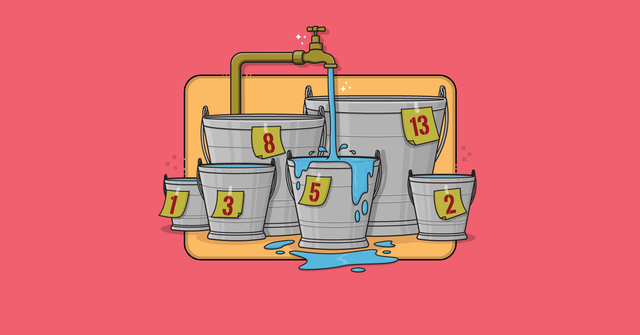
Story Point Estimates Are Best Thought of as Ranges
When estimating in story points, teams should think in terms of ranges and rounding up. Here’s why.

What Are Agile Story Points?
Understand what story points measure and why they are often misunderstood.

Estimating and Planning Are Necessary for Maximizing Delivered Value
See why planning and estimating still matter for maximizing value in agile work.

Why Your Scrum Team Still Works Like Individuals
Learn how handoffs, individual task ownership, and status-report daily scrums keep Scrum teams from collaborating—and what to change next sprint.


Leading Agile Initiatives: How Leaders Help Agile Change Succeed
An agile initiative is not mainly a one-time rollout of Scrum, Kanban, SAFe, Jira, new job titles, or a different meeting calendar.

How to Estimate Story Points With Multiple Teams
Establishing a common baseline allows multiple teams to estimate consistently with story points.
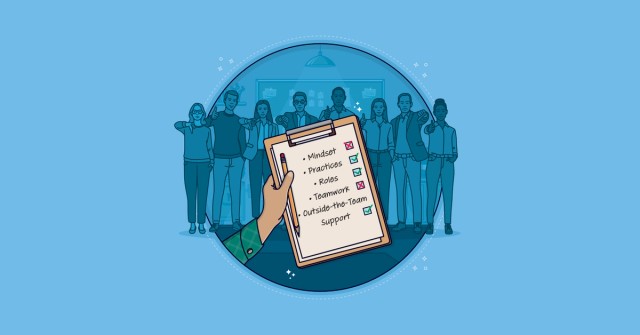
We Tried Agile and It Didn’t Work
“We tried agile and it didn’t work” is one of the most revealing things a leader can hear.

How Much Can You Really Tinker with Scrum?
Does Scrum work if you don’t have a Scrum Master? What about sprints?

Plan Visualizer
The Plan Visualizer is a free agile forecasting tool for testing whether a target scope can be completed by a target deadline. It plots the plan against a low and high velocity estimate so teams and stakeholders can…

Velocity Range Calculator
Use this to calculate a velocity range from historical sprint data and support milestone forecasting.