
A few years ago, I worked with a product team that was stuck.
They were smart, experienced, and deeply committed to building something meaningful. But despite their talent, their work felt...flat. They were completing tasks, but they weren’t creating anything truly innovative. They weren’t challenging each other’s thinking. They weren’t imagining possibilities beyond the obvious ones.
Then something shifted.
During a planning meeting, someone asked a question that reframed the whole discussion: “What problem are we really trying to solve?”
That question sparked a debate — a lively one — and within minutes, the room was buzzing with ideas none of them had considered before. They envisioned possibilities, challenged assumptions, pushed each other, and built on each other’s thinking. By the end of the meeting, they had the beginnings of a breakthrough.
What changed?
Not the people. Not the tools. Not the process.
What changed was the team, acting like a team again — sharing purpose, curiosity, and creativity.
And that’s when I was reminded of a simple truth:
Real innovation happens when people think together.
The Myth of the Lone Genius
For generations, we’ve romanticized the idea of the lone visionary — the single brilliant mind who creates something extraordinary in isolation.
But that’s not how great products are built. And it’s not how innovation actually works.
Even when an idea begins with one person, it is shaped, refined, improved, and made real by many.
Teams provide the friction, feedback, and diversity of thought that transform good ideas into great ones.
When I look at the most successful product teams I’ve worked with over the years, they all share something powerful: a commitment to thinking together.
They don’t simply divide work.
They pursue understanding.
They debate.
They explore.
They build on each other’s strengths and perspectives.
That collaborative engine is what produces insight — and insight is what produces breakthrough results.
The Research Backs This Up
Decades of research point to the same conclusion.
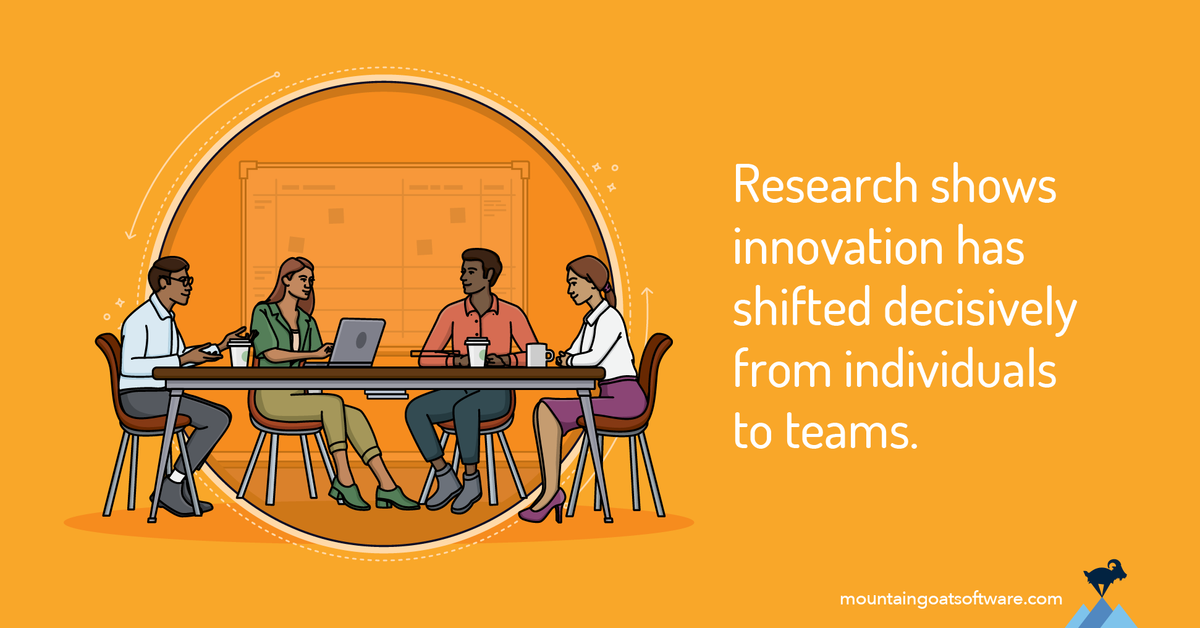
A landmark analysis published in Science looked at 19.8 million research papers and 2.1 million patents. Over the five decades of this research, the percentage of team vs. individual discoveries grew. And team discoveries were six times as likely to be highly referenced by future research.
The conclusion is clear:
Innovation has shifted decisively from individuals to teams.
This isn’t a coincidence. As problems become more complex, we need more perspectives to solve them.
Teams bring that.
They bring debate. They bring conflict and reconciliation. They bring the synthesis of multiple ideas into something none of them could have created alone.
Innovation is a conversation.
What High-Performing Teams Do Differently
In my work with teams around the world, the differences between high-performing teams and groups of individuals is unmistakable.
High-performing teams:
- Share a deep understanding of purpose
- Challenge each other respectfully
- Encourage experimentation
- Create psychological safety for new ideas
- Find joy — even fun — in working together
Simon Sinek would say they know why they’re doing the work. This shared purpose isn’t a feel-good sentiment. It’s a performance driver.
Research from Google’s Project Aristotle confirms that teams with psychological safety and shared meaning consistently outperform those without it.
Amy Edmondson’s work shows that teams who openly learn and explore together innovate faster.
When teams understand the why, they do better work.
When they lose that, creativity evaporates.
A Story About What Happens Without True Collaboration
I once worked with a team that used AI to determine what their users wanted. They created a very thorough product backlog.
But they rarely talked to their prospective users.
The product that resulted was technically impressive — but emotionally empty. Useful, but not compelling. Functional, but not intuitive.
They had the talent. They had the data.
What they lacked was collective curiosity, the kind that emerges when a team explores a problem together and challenges each other’s assumptions.
They didn’t need better tools.
They needed better teamwork.
Teams Matter More Today than Ever
Today’s work is more interdependent, more complex, and more unpredictable than anything we faced twenty or thirty years ago.
Customers expect better experiences. Markets shift faster. Products intertwine across disciplines. Solutions require a wider range of expertise.
We need teams — not because it’s fashionable, but because it’s necessary.
Teams that think deeply.
Teams that collaborate authentically.
Teams that challenge and support one another.
Teams that understand why their work matters.
The Science research didn’t mark the end of individual creativity — it marked the rise of collective creativity.
A Call to Action for Leaders
If you lead teams, this is the moment to double down on teamwork—real teamwork, not just task distribution.
Invest in:
- Stable, cross-functional teams
- Psychological safety
- Time for discovery
- Purpose-driven work
- Clear communication and shared learning
- Team training and coaching that unlock creativity
Because in every organization I’ve ever worked with, one truth always holds:
When teams thrive, everything else gets better.
Better ideas.
Better products.
Better performance.
Better outcomes for customers and the business.
Teams remain our most powerful engine for innovation — and they will shape the breakthroughs of the next decade.
How Mountain Goat Software Can Help
If this made you think about your own teams — their collaboration, their creativity, their purpose — you’re not alone. Many organizations have talented people who simply aren’t working together in the way they want or need.
That’s exactly where Mountain Goat Software can help.
For more than 20 years, we’ve helped organizations build high-performing, collaborative teams that deliver meaningful results. Through training, coaching, and hands-on guidance, we help teams:
- Strengthen communication and trust
- Clarify purpose and align around shared goals
- Improve collaboration and decision-making
- Deliver value more predictably
- Create an environment where creative thinking thrives
If your teams aren’t performing as well as you’d like — or if you know they’re capable of more — we'd love to talk.
Helping organizations build stronger, more effective teams is what we do best.

Product Backlog
FeaturedThe product backlog is the Scrum Team’s ordered list of possible future work for the product. It includes the work the Product Owner may ask the Scrum Team to build, fix, research, improve, or learn about next.
Succeed Faster with Private Training
FeaturedHelp your teams make faster progress with private agile courses, workshops, and mentoring tailored to your organization. Accelerate your agile journey by working with experienced facilitators in privately-run agile…
When Do Agile Teams Make Time for Innovation?
FeaturedMake space for innovation inside short sprint cycles.
What Is a High-Performing Agile Team?
How to build and sustain a Scrum team that exceeds the sum of its parts.

New To Agile Or Scrum
Agile helps teams deliver value sooner, learn faster, and adapt when plans change. Use this guide to understand what agile is, how it differs from Scrum, when agile helps, and where to go next if you are just…
Agile Teamwork
Learn how agile teams share responsibility, reduce handoffs, and finish valuable work together.
AI Doesn’t Eliminate Agile Teams — It Increases the Need for Great Ones
Discover how AI is reshaping agile teams, why collaboration matters more than ever, and what leaders must do.

3 Ways to Help Agile Teams Plan Despite Uncertainty
We might not like ambiguity, but it’s a fact of life. Find out how to plan with uncertainty in mind.
Getting Better Estimates Is Easier Than You Think
Is your team hesitant to estimate? Here's the secret: we're not as bad (or as good!

Why Your Scrum Team Still Works Like Individuals
Learn how handoffs, individual task ownership, and status-report daily scrums keep Scrum teams from collaborating—and what to change next sprint.

3 Ways to Ensure Agile Training Works to Transform Your Teams
The best agile training leads to real results. Learn how to ensure your investment pays off.
Why Scrum Isn’t Working Even Though You’re Doing Scrum
Story splitting helps teams turn large user stories into smaller, valuable pieces they can finish within a sprint without turning them into tasks.

How to Reward Agile Teams
Incentives and bonuses can be used to reward agile teams but must be aligned with agile principles. Here are some tips on how to do that.
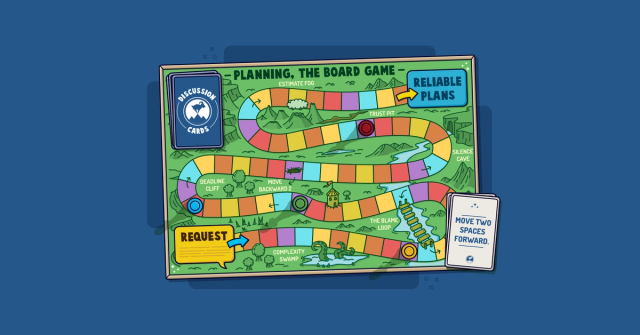
When Planning Should Become A Shared Problem
Turn planning pressure into a shared conversation about options and tradeoffs.

What Is Cross-Functional Collaboration in Agile?
Clarify what cross-functional teams really need and what they do not.
How to Use AI for Product Discovery and Writing Better User Stories
Use AI to support product discovery, user interviews, and writing better user stories.

Why Smart Teams Overcommit And How Leaders Make It Worse
Understand how leader pressure can push smart teams into unrealistic commitments.

Your Team Won’t Think of Everything in Sprint Planning Meetings. And That’s OK.
Your team is probably spending too much time in sprint planning meetings. Here’s how to spend less time but plan better.
What Are Agile Story Points?
Understand what story points measure and why they are often misunderstood.

Agile Collaboration: What It Is, How It Feels, and Why It Matters
Collaboration on high-performing teams is like a rowing team in perfect sync.